

Losing a pet is heartbreaking, and it’s often misunderstood by others. Pet loss support groups offer a safe space to share your grief, honor your pet’s memory, and connect with people who understand your pain. These groups, either in-person or virtual, are led by trained facilitators and focus on short-term emotional support. You’ll find comfort, coping strategies, and a community that validates your loss. While not a replacement for professional therapy, they can be a helpful step in your healing process.
Key Points:
- Purpose: Emotional support after losing a pet.
- How to Join: Available through shelters, veterinary clinics, and online platforms.
- What to Expect: Confidential, judgment-free discussions where you can share or simply listen.
- Rules: Respect, confidentiality, and short-term focus.
If your grief feels overwhelming or affects daily life, seek professional help or crisis support services.
How to Join and Participate in Pet Loss Support Groups
How Pet Loss Support Groups Work
Finding a Support Group
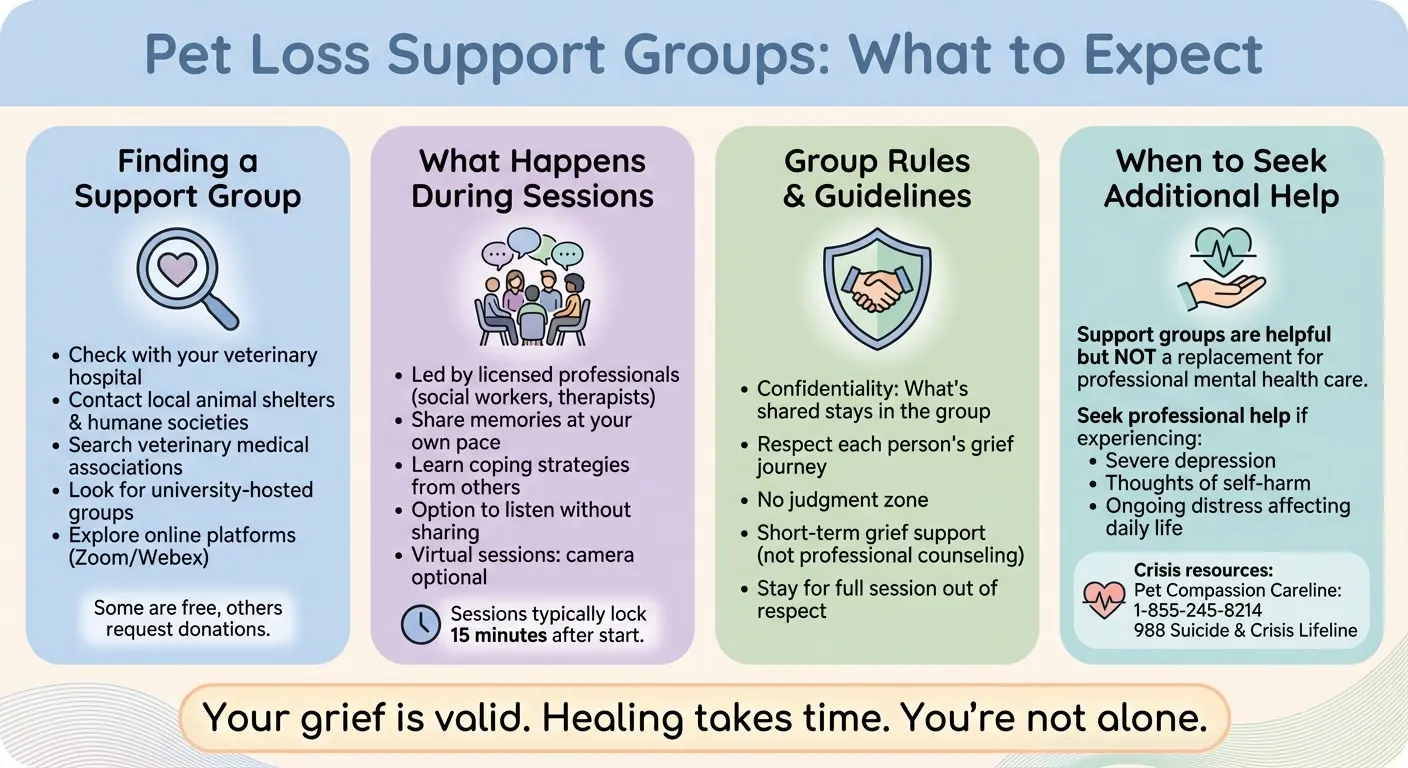
Pet loss support groups are widely available and easy to access. You can often find them through local animal shelters, humane societies, veterinary medical associations, hospices, or universities. A good starting point is your veterinary hospital - check their website or give them a call. Many clinics maintain lists of nearby resources or even host their own groups.
For added convenience, many groups now offer virtual sessions via platforms like Zoom or Webex. Some are free to join, while others may request a donation. Registration requirements vary: some groups ask for pre-registration, while others allow you to drop in as needed. There are also groups tailored to specific needs, such as those for rabbit owners or for individuals seeking spiritual guidance alongside grief support.
Once you've found a group, it’s helpful to understand how sessions are typically structured.
What Happens During a Session
Support group sessions are designed to provide a welcoming, judgment-free environment where you can process your grief at your own speed. Most are led by licensed clinical social workers, therapists, or other mental health professionals who guide the discussions with care and empathy.
Sessions often begin with a facilitator opening the conversation and setting a supportive tone. While the facilitator helps guide discussions, you decide how much - or how little - you want to share. These meetings give you a chance to honor your pet, share memories, and learn coping strategies from others who truly understand your experience. If you're attending a virtual session, you can choose whether to turn on your camera or simply listen if that feels more comfortable.
Participants are generally asked to stay for the full session out of respect for others. In virtual settings, many groups lock the meeting 15 minutes after it starts to minimize interruptions during these deeply personal moments.
Throughout the session, clear rules and a focus on confidentiality ensure that everyone feels safe and supported.
Group Rules and Privacy
To protect the emotional well-being of all participants, support groups establish clear guidelines. These groups focus on short-term grief support rather than offering professional counseling for mental health conditions. This distinction helps participants set realistic expectations for what the group can provide.
For example, the Seattle Animal Shelter’s Pet Loss Support Group requires participants to agree to the City of Seattle’s terms before joining. These terms clarify that the group provides short-term grief support, does not include professional counseling or psychological assessments, and releases the Seattle Animal Shelter and the City of Seattle from any liability related to participation.
Confidentiality is a cornerstone of these sessions - what’s shared in the group stays in the group. Participants are encouraged to communicate respectfully, honor each person’s unique grief journey, and avoid passing judgment. These boundaries help foster trust, creating a space where genuine healing can take place.
Where Can I Find Pet Grief Support Groups?
What to Expect When Joining a Support Group
Joining a support group can bring emotional relief and a sense of connection. Here's what you might experience when you take that step.
Emotional Benefits of Joining
Being part of a pet loss support group offers a comforting, judgment-free environment where you can openly share your grief. It connects you with others who truly understand the pain of losing a beloved pet, helping to ease feelings of isolation. As Lap of Love explains:
Many pet parents feel alone when their beloved pet dies.
In these sessions, your loss is acknowledged and validated - never dismissed as "just a pet." This space allows you to honor your pet’s memory while gaining practical tools to cope with your grief. You can process your emotions at your own pace, taking steps toward healing. As Coleen Ellis, a grief consultant and author, puts it:
You never get over it, but you do get through it.
Common Concerns About Joining
It’s natural to feel hesitant about joining a support group. You might question whether your grief is "big enough" to belong, or worry about sharing deeply personal emotions. There’s also the fear that others might downplay the bond you shared with your pet. Coleen Ellis offers this reassurance:
Permit yourself to grieve your loss and not run away from your feelings simply because you think society will shame you and tell you your companion was 'just a pet'.
Support groups are designed to address these worries. Facilitators foster a warm and compassionate atmosphere where every experience is respected. You’re free to participate at your own comfort level - there’s no obligation to share until you’re ready. While opening up may feel intimidating at first, many find comfort in the shared understanding of the group.
When You May Need Additional Help
While support groups can provide valuable short-term relief, they’re not a replacement for professional mental health care. If your grief leads to severe depression, thoughts of self-harm, or ongoing distress that interferes with daily life, it’s crucial to seek professional help. The Animal Welfare Association emphasizes:
[This support group] is not intended to directly support or provide a substitute for definitive mental health care, especially in a crisis.
For immediate assistance, resources like the Pet Compassion Careline (1-855-245-8214) or the 988 Suicide & Crisis Lifeline are available. Additionally, many group facilitators can help connect you with professional counseling if needed.
sbb-itb-a4e988d
Preparing for Your First Session
Getting ready for your first session involves a mix of practical planning and emotional preparation. Here's how you can make the process smoother and more manageable.
Practical Steps to Take
Start by confirming the session's logistics: is it virtual or in-person? Double-check the date, time, and any registration requirements. For instance, the Seattle Animal Shelter's Pet Loss Support Group meets weekly via phone/Webex every Thursday from 5:30 to 7:00 p.m. To join, participants need to email [email protected] for details. If it's a virtual meeting, expect to receive the link shortly before the session begins.
Make sure to review any guidelines provided by the organizers. These rules often emphasize that the group is meant for short-term support, not professional counseling. They may also include expectations like arriving on time and staying for the full session. If you register but later realize you can't attend, let the organizers know so someone else can take your place.
Getting Ready Emotionally
Once the logistics are squared away, focus on preparing yourself emotionally. It’s perfectly normal to feel a mix of nerves and uncertainty before attending your first session. Remember, these groups are designed to offer a compassionate space where you can process your grief at your own pace. There’s no pressure to share right away - many people prefer to simply listen during their initial meeting.
You might find it comforting to bring a photo of your pet to the session. Having this personal reminder can help you feel more connected to your pet’s memory as you reflect or share your story. If you’re worried about how to express your emotions, try journaling beforehand. Writing down your thoughts can help you organize your feelings and manage the grief, especially if you’re concerned others may not fully understand your pain.
Dr. Karmen Smith, LCSW, DD, a therapist with Talkspace, explains the depth of this bond beautifully:
Most people who have bonded with a pet know the comfort and joy animals provide. When we lose a pet, part of us feels like it's dying. Pets may be the only time we experience unconditional love.
Conclusion
Losing a pet is an incredibly painful experience, but pet loss support groups can provide a comforting space to navigate your grief. These groups allow you to share your emotions, recount memories, and connect with others who truly understand the deep bond you had with your companion. They also help you realize that your feelings are valid and that healing is a process that takes time.
As The Bond Between puts it, "Talking about your grief is not just helpful; it is essential to your healing journey". Whether you choose to join in-person or virtual sessions, these communities offer understanding, practical coping strategies, and long-term support, helping you take meaningful steps forward.
If you're feeling the weight of pet loss, considering a support group might be a helpful way to begin healing. Many of these groups are free or low-cost, and while finding the right one might take some effort, the comfort and understanding they provide are well worth it.
Additionally, compassionate aftercare services can help ease the burden of final arrangements. Companies like Animal Aftercare offer 24/7 nationwide services, including pet cremation, equine cremation, and euthanasia, all handled with care and dignity. Trusting a reliable partner to manage these arrangements allows you to focus on honoring your pet’s memory and finding peace in your healing journey.
FAQs
How can I find the right pet loss support group for me?
Finding the right pet loss support group begins with understanding your own needs. Think about whether you’d feel more comfortable with an in-person gathering or a virtual meeting, and whether you’d prefer a one-time session or a regularly scheduled group. Additionally, consider if a general group works for you, or if you’d benefit from one designed for specific circumstances, such as groups for children, seniors, or owners of particular types of pets.
Once you’ve narrowed down your preferences, start exploring local resources. Veterinary clinics, community centers, and university programs often host or recommend support groups. For those seeking virtual options, national organizations and online directories make it easy to connect from the comfort of home. Many groups even allow you to attend a session before deciding, so don’t hesitate to try different ones until you find the right fit for your journey.
If you’re also in need of caring aftercare services, such as cremation or euthanasia, Animal Aftercare offers 24/7 support nationwide, ensuring both pets and their families are treated with dignity and compassion.
What happens during a pet loss support group session?
In your first pet loss support group session, you’ll be greeted by a facilitator who will outline the group’s purpose, go over key guidelines like maintaining confidentiality and showing respect, and explain how the session will unfold. Most meetings start with introductions, where participants share their pet’s name and a cherished memory. This helps create a warm and understanding environment.
The facilitator will then encourage group members to share their feelings - whether it’s sadness, guilt, or just the deep sense of loss - while others listen with empathy. These groups are centered on peer support rather than formal therapy. Facilitators, who are often trained counselors or veterinary professionals, offer guidance and help validate emotions.
Sessions usually last about an hour and often include conversations about coping methods, such as creating a memorial or handling overwhelming emotions. Some facilitators may also provide information about aftercare services, like those from Animal Aftercare, which offers respectful options for pet cremation and euthanasia. These sessions provide a safe and comforting space to process your grief and connect with others who truly understand what you’re going through.
When is it better to seek professional help instead of joining a pet loss support group?
Pet loss support groups offer a comforting space where you can share your emotions and connect with others who truly understand the pain of losing a beloved pet. But sometimes, grief can take a deeper toll. If you're struggling with daily life - like having trouble sleeping, feeling persistently sad for months, losing your appetite, finding it hard to concentrate, or experiencing thoughts of self-harm - it’s important to consider reaching out for professional help. A licensed counselor or therapist can provide the personalized care and tools you need to navigate your healing journey.
While support groups focus on peer connection and shared experiences, they don’t replace clinical treatment. If your grief feels too overwhelming or if you have a history of mental health challenges that worsen after your loss, a professional can offer the guidance and tailored support that peer groups may not provide. And remember, if you or someone else’s safety is at risk, don’t hesitate - contact emergency services (911) or a medical professional right away. Your well-being matters.