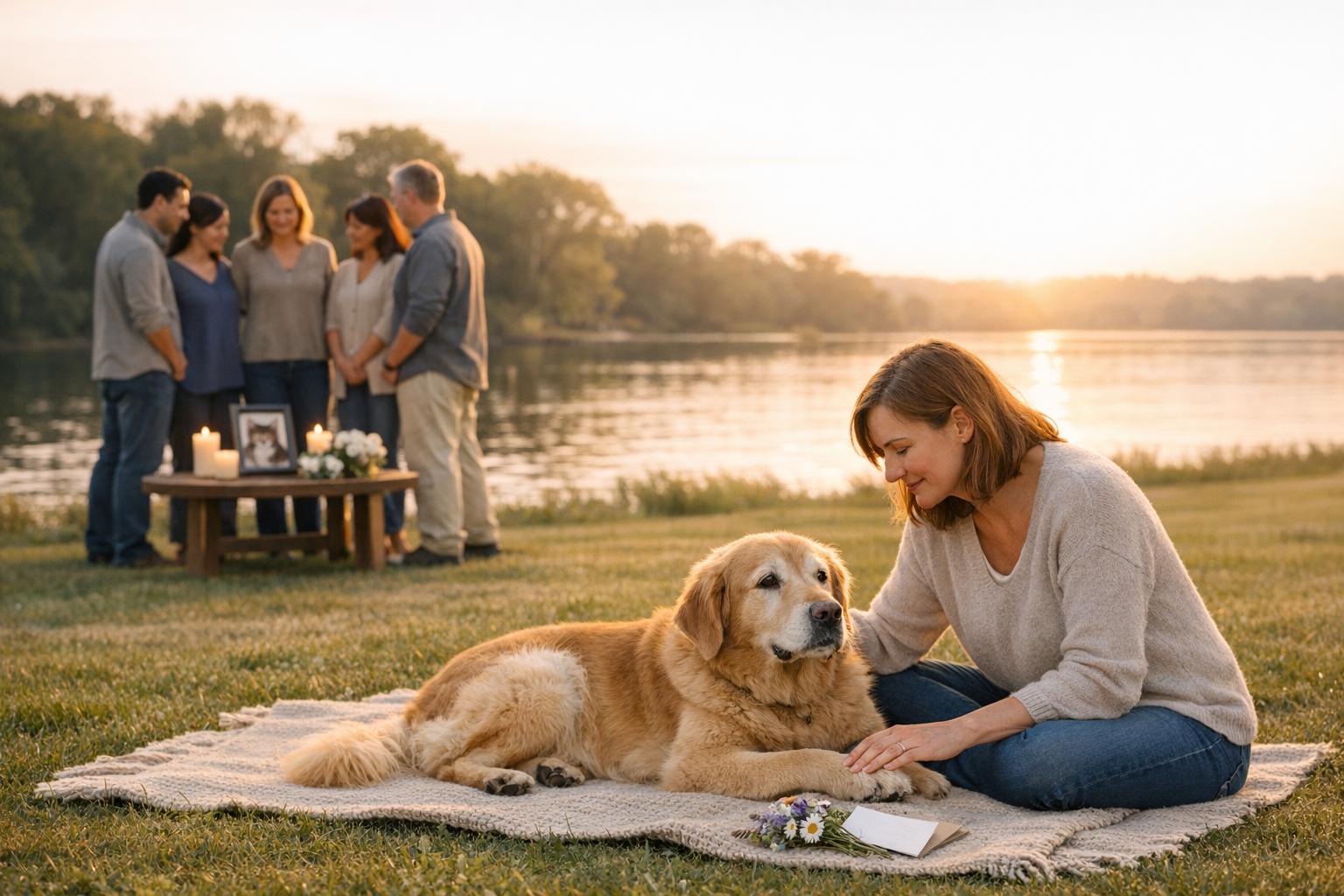
When it’s time to say goodbye to a pet, people often choose between group farewells or individual moments. Each approach offers unique ways to cope with grief and honor your pet’s memory. Group farewells bring families together for shared ceremonies, storytelling, and support, while individual goodbyes focus on private, personal rituals like lighting candles or writing letters. Both have their benefits and challenges, and the best choice depends on your emotional needs, family dynamics, and logistical considerations.
Key Takeaways:
- Group Farewells: Provide shared support, strengthen family bonds, and prevent feelings of exclusion but require planning and may feel overwhelming for some.
- Individual Farewells: Allow for private reflection, personal rituals, and grieving at your own pace but can feel isolating and lack shared closure.
Quick Comparison:
| Factor | Group Farewell Activities | Individual Farewell Activities |
|---|---|---|
| Emotional Support | Shared grief, family connection | Personal space to process emotions |
| Privacy | Limited; involves others | Complete privacy |
| Planning Effort | Requires coordination | Flexible timing |
| Cost | Often lower with communal options | Higher, especially with private services |
| Suitability | Best for families seeking collective healing | Ideal for those preferring solitude or personal rituals |
Combining both approaches - like hosting a group ceremony followed by private rituals - can balance shared support with personal reflection, creating a meaningful way to honor your pet.
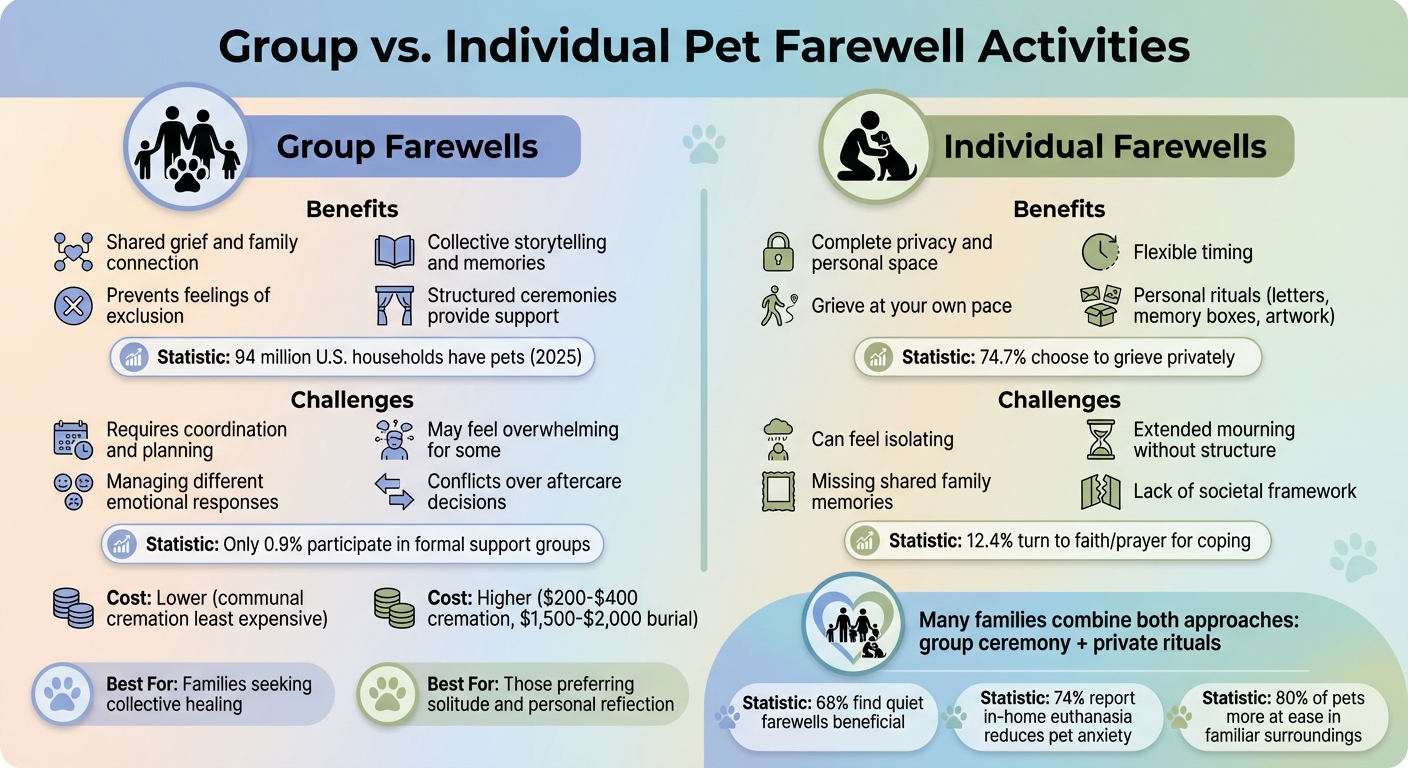
Group vs Individual Pet Farewell Activities Comparison Chart
5 End-of-Life Tips That Made Saying Goodbye to My Dog More Peaceful 💔
Benefits of Group Pet Farewells
When families come together to say goodbye to a beloved pet, the shared experience of grief becomes a powerful way to heal. As Dr. Sarah Hoggan explains:
"Sharing grief is a basic ritual of healing for social cultures. This connection builds a support system that eases grief and allows a family to express their feelings safely and seek comfort from others."
Sharing Stories and Memories Together
Group farewells offer a chance to reflect on the pet's life through shared stories and memories. Each family member can contribute their unique perspective, creating a fuller picture of the pet’s life and personality. These moments of collective remembrance not only honor the pet but also reassure everyone that their feelings are valid. This process naturally strengthens family bonds as they support one another.
Building Stronger Family Connections
A formal ceremony can provide structure during an emotional time, helping families come together with a shared purpose. This unified approach to grief creates a sense of connection and mutual support. Dr. Carrie La Jeunesse highlights this communal aspect:
"Memorials allow us to gather support from others and to allow others who love and care about us to offer support. Bereavement, although unique to each individual, is a shared and very communal experience."
By navigating the loss together, families can create a supportive environment that reduces feelings of isolation or regret.
Avoiding Regret Through Inclusion
Including everyone in the farewell process, especially children, can prevent feelings of regret or exclusion. Giving kids meaningful roles - like picking a song, drawing a tribute, or leading a small ceremony - empowers them to process their emotions in a constructive way. With nearly 94 million U.S. households having at least one pet as of 2025, these group farewells reflect a tradition that resonates widely across American families.
Challenges of Group Pet Farewells
Group farewells for pets can provide a sense of connection, but they also come with logistical and emotional hurdles. Understanding these challenges can help families decide if a shared farewell is the right choice for them.
Coordination and Planning Difficulties
Bringing everyone together for a group farewell requires thoughtful planning. Families must decide on timing - whether to hold the ceremony immediately or wait for the return of cremation ashes. This decision often needs to align with children’s schedules, as weekend mornings or early afternoons are typically best for maintaining their focus. Choosing a location adds another layer of complexity, balancing sentimental value with practical considerations like weather, outdoor setting contingencies, or local regulations for home burials.
Ed Martin, President and Director of Hartsdale Pet Cemetery, highlights the deeply personal nature of these decisions:
"The loss of a pet can be just as emotional and distressing as the loss of a human family member. Owners just want to say farewell in the way that is most appropriate for them".
On top of this, gathering resources such as keepsakes and photos can take significant time. Financial concerns also play a role, with cremation services typically costing $200 to $400, while cemetery burials range from $1,500 to $2,000. These expenses often come after costly end-of-life veterinary care. These practical challenges may influence whether a group farewell feels feasible for a family, setting the tone for the emotional dynamics that follow.
Managing Different Emotional Responses
Beyond the logistical hurdles, emotional responses to pet loss differ greatly. Some people experience "disenfranchised grief", where they feel their loss isn't acknowledged or hear dismissive remarks like "it was just a pet". While collective mourning can bring comfort to some, others may feel uncomfortable or overwhelmed by shared displays of grief, such as crying or storytelling, leading them to withdraw. A national survey even found that 74.7% of pet owners chose to grieve privately after euthanasia, suggesting that many prefer solitude over group expressions of loss.
Conflicts over aftercare decisions can also arise. One person may want to keep the ashes at home, while another might prefer scattering them in a meaningful location. Additionally, children and adults process grief differently. Kids often benefit from brief, straightforward rituals, whereas adults may need more time for reflection and sharing memories.
When Group Settings Feel Too Intense
For some, group farewells can feel overwhelming rather than supportive. The pressure to perform - whether by speaking or openly displaying emotions - can lead to feelings of inauthenticity, especially for those who aren't ready to express their grief publicly.
Being surrounded by others’ intense emotions or hearing traumatic stories can amplify grief, particularly for sensitive individuals or children. Long or overly structured ceremonies can also leave participants feeling drained, turning what should be a meaningful experience into an exhausting one.
The lack of established societal rituals for pet loss adds to these challenges. Without clear guidelines for what is "normal", many people choose to grieve in isolation to avoid the discomfort of public mourning. In fact, only 0.9% of bereaved pet owners reported participating in formal support groups, highlighting how daunting such settings can feel.
Benefits of Individual Pet Farewells
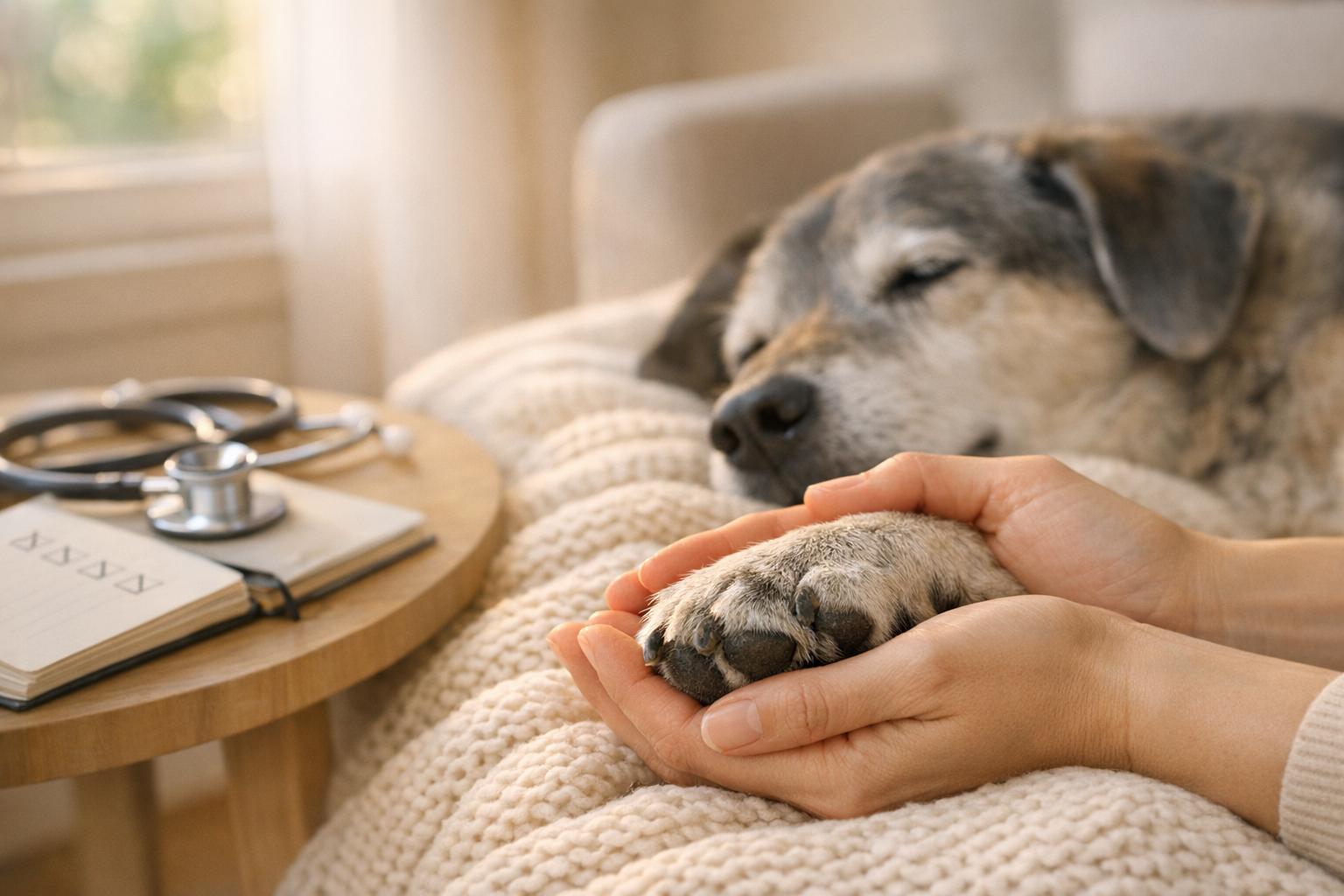
Saying goodbye to a beloved pet in a private setting allows for a deeply personal grieving process. Many people find comfort in mourning privately rather than in formal or public settings, as it provides the space needed to navigate one of life’s most heart-wrenching experiences.
Private Moments for Personal Reflection
A private farewell offers the opportunity to create meaningful rituals that honor your pet in a way that feels uniquely yours. For example, in April 2024, a family celebrated their Sheltie, Chase, by arranging a "party on the bed." They surrounded him with his favorite blanket and toys, creating a comforting and familiar environment for his final moments. Another family chose to commemorate their dog Rufus by inviting singer-songwriter Pamela Gerrand to perform a special song during his passing, turning the moment into a sacred and deeply personal experience.
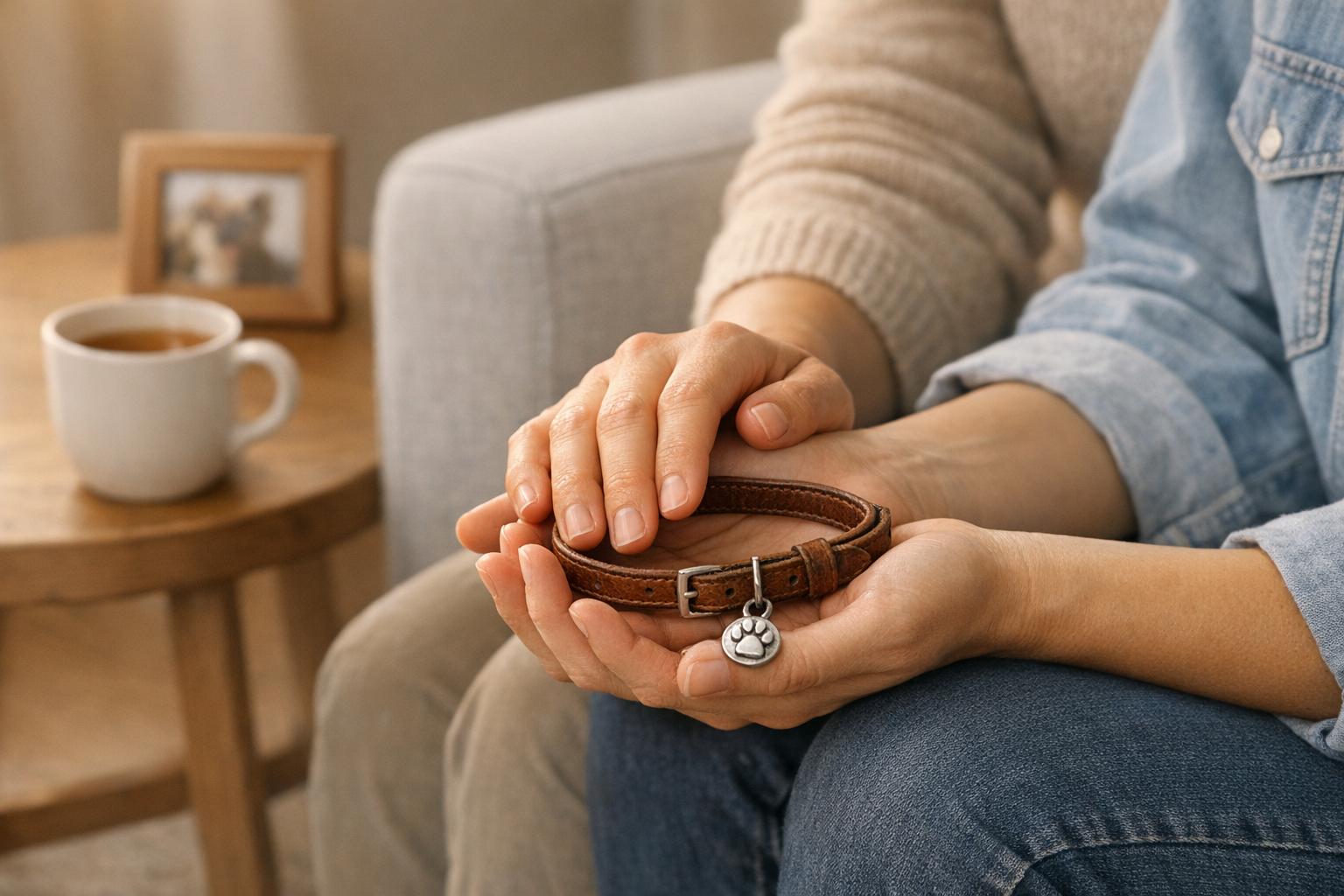
Simple acts like writing letters to your pet, assembling a memory box with items like their collar or favorite toy, or crafting memorial artwork can help you process your grief. These rituals provide a way to turn intangible emotions into something tangible, allowing you to acknowledge the "presence of the absence" - the quiet void left behind by their loss.
Grieving at Your Own Pace
One of the most comforting aspects of an individual farewell is the freedom to grieve on your own timeline. Without the constraints of a formal schedule, you can take the time you need both before and after your pet’s passing to reflect and be present. This flexibility is especially important since pet loss is often misunderstood or minimized by others, with some dismissing it as "just a pet". A private setting offers a judgment-free space to honor your bond and let the loss sink in naturally.
Processing Emotions Privately
In a private farewell, you can fully express the range of emotions that come with saying goodbye. Whether it’s gratitude, regret, relief, or a mix of everything in between, having a private moment allows you to process these feelings without worrying about how others might perceive them. You can cry, speak to your pet, or simply sit in silence - whatever feels right in the moment.
Dr. Sarah Hoggan, DVM, explains this beautifully:
"The purpose of the memorial is to honor your pet's life and the bond that you shared; your love was real, and your grief is valid."
For many, the journey toward healing is deeply personal. Some find solace in adopting a new pet, with nearly one-third (32.1%) of owners choosing this path, while others - about 12.4% - turn to faith or prayer as a way to cope. These individual approaches highlight how unique the grieving process can be, allowing you to find meaning and comfort in your own way. Next, we’ll explore the challenges associated with individual pet farewells.
Challenges of Individual Pet Farewells
Private farewells can offer deeply personal moments, but they often come with their own set of challenges. One of the biggest hurdles is the lack of a societal framework for grieving a pet alone, which can make the process feel isolating and unsupported.
Feeling Alone in Your Grief
Grieving alone can amplify feelings of isolation, especially when others downplay the significance of your loss. Dr. Carrie La Jeunesse explains this dynamic:
"It can be a singularly isolating experience, and society often dismisses the loss of a pet as not that important compared with the loss of a human loved one."
A national survey revealed that while 74.7% of pet owners grieved privately, only 0.9% sought support through a group setting. This isolation is often compounded by dismissive comments like, "It's just a pet". Such attitudes can push individuals to internalize their grief, which has been linked to higher levels of stress, depression, and even physical health issues.
Extended Mourning Periods
Without the structure of shared rituals, mourning can stretch on indefinitely or feel unresolved. Sarah Hoggan, DVM, highlights the importance of shared grief:
"Sharing grief is a basic ritual of healing for social cultures."
Joelle Nielsen, MSW, LSW, from Ohio State University Veterinary Medical Center, adds that avoiding grief can hinder the healing process:
"The reality is that you need to feel those sad feelings... Shoving it away or putting it up on a shelf isn't usually effective."
Unaddressed grief can intensify over time, making it harder to heal. While some people find comfort after just one or two sessions in a pet loss support group, others may require a year or more of counseling to process their emotions.
Missing Shared Family Memories
Individual farewells can limit opportunities for families to come together and honor their pet collectively. A shared ceremony helps create a moment of closure, allowing everyone to transition from mourning to cherishing the memory of the pet. Without this communal experience, family members may struggle to find their own sense of closure, leaving them disconnected during an already emotional time.
In households with multiple pets, excluding surviving animals from the farewell can add to their stress. These pets may exhibit "searching" behaviors as they try to make sense of the loss.
Understanding these challenges can help you decide which farewell approach best supports both your emotional needs and those of your family.
sbb-itb-a4e988d
Group vs. Individual: Side-by-Side Comparison
Deciding between a group or individual farewell depends on factors like emotional needs, privacy preferences, and logistical considerations. The table below offers a quick comparison to help guide your choice before diving into professional aftercare options in the next section.
Comparison Table
| Factor | Group Farewell Activities | Individual Farewell Activities |
|---|---|---|
| Emotional Support | Provides a sense of community through shared experiences with others who understand the loss. | Focuses on a deeply personal and private reflection of your unique bond with the pet. |
| Privacy | Takes place in a shared environment, with optional participation. | Offers a completely private setting, often at home, free from disruptions or clinical environments. |
| Coordination Effort | Easier to arrange, as group meetings are collectively scheduled. | Requires more effort, including arranging vet visits, selecting aftercare options, and handling remains. |
| Cost Implications | More affordable; communal cremation is typically the least expensive option. | Can be pricier, with private cremation costing $200–$400 and professional burial services ranging from $1,500–$2,000. |
| Suitability | Perfect for those feeling isolated and seeking comfort through peer support. | Ideal for families who prefer a quiet, dignified, and highly personalized farewell. |
Privacy often plays a significant role in these decisions. Research shows that 68% of families find quiet farewells beneficial. Additionally, 74% report that in-home euthanasia reduces pet anxiety, with 80% of pets appearing more at ease in familiar surroundings.
Each approach honors the special connection you shared in its own meaningful way.
Working with Professional Pet Aftercare Services
Professional pet aftercare services offer a compassionate way to honor your beloved pet, whether through a private farewell or a shared memorial. These services help bridge the emotional gap between saying goodbye and celebrating cherished memories.
Animal Aftercare's Services

Animal Aftercare provides families with thoughtful options to honor their pets. For those seeking a more personal tribute, their individual cremation service ensures that your pet is the only one in the cremation chamber. The ashes are returned to you in an urn or container of your choice, making it ideal for private memorials or quiet reflection moments. If you prefer a communal approach, their communal cremation option allows pets to be cremated alongside others, with the remains often scattered in a peaceful, natural location.
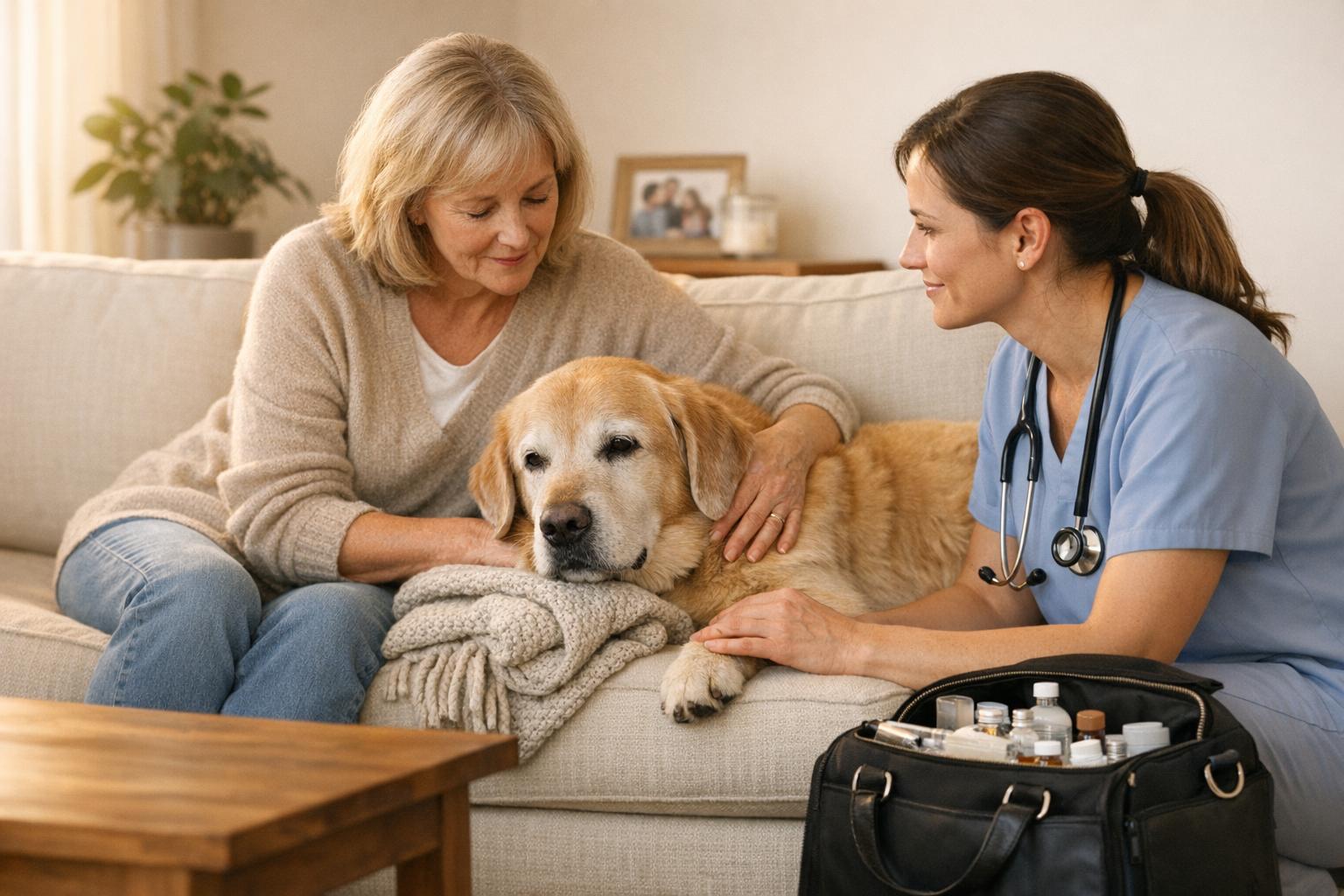
For horse owners, Animal Aftercare also offers equine cremation services, with both individual and communal options available. They even provide transportation for large animals, ensuring convenience during a difficult time. Additionally, their in-home euthanasia service allows your pet to pass peacefully in the comfort of familiar surroundings. This option gives the entire family, including other pets, the chance to say goodbye. Their professional team handles the collection and transportation of your pet to the crematorium with care and respect.
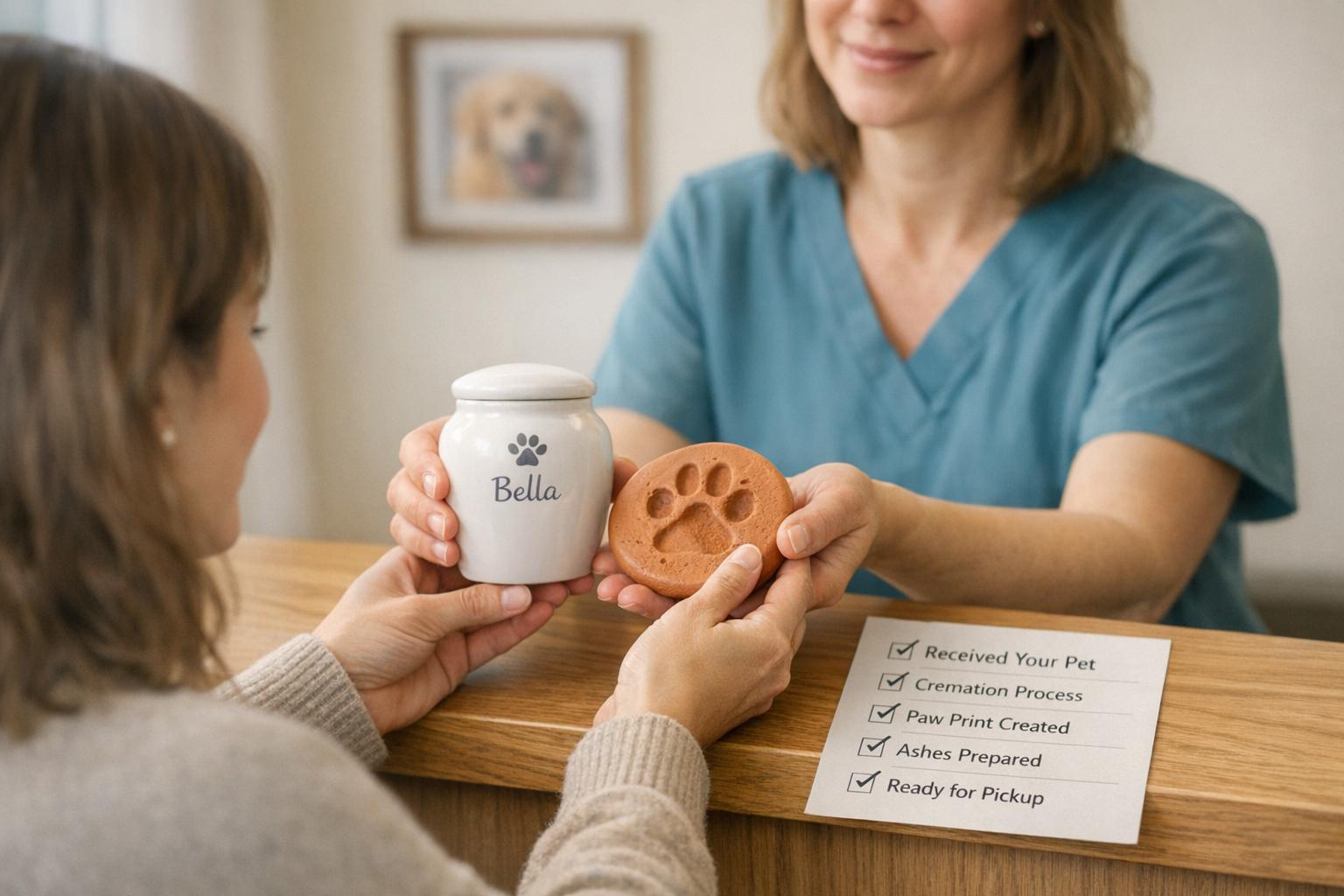
To help families create lasting memories, Animal Aftercare offers a variety of personalized keepsakes. These include clay paw prints, fur clippings, custom-engraved wood urns, and cremation jewelry. They also provide digital tools, such as a Pet Loss Memorial Planner, Urn Size Calculator, and Memorial Ideas Generator, to help you design a farewell that feels right for you and your family.
Supporting Both Group and Individual Farewells
Animal Aftercare understands that every family grieves differently and tailors its services to meet your needs. If your family prefers to come together, you can arrange a group ceremony using the ashes from an individual cremation. For more personal moments, individual cremation offers the space for private reflection. These flexible options ensure that you can create a tribute that feels meaningful and fitting for your family's unique dynamic.
With over 600 pet aftercare facilities operating across the United States, cremation has become the most common choice for handling pet remains. Whether you choose a private or shared farewell, professional aftercare services provide the support and care needed to honor your pet’s memory.
Choosing the Right Approach for Your Family
What to Consider
When deciding how to say goodbye to a beloved pet, it's important to choose a farewell that feels right for both your family and your pet. The size and dynamics of your family play a big role here. For instance, larger families or those with children may find comfort in shared activities that help everyone process grief together. These group moments can make the loss feel less isolating and provide mutual support during a difficult time.
Your pet's personality and favorite places should also guide your decision. Think about the spaces they loved most - whether it was the backyard, a favorite park, or even a cozy spot by the window. Incorporating these special places into your farewell plan can make the tribute feel more meaningful and personal.
Grief is deeply individual, and each family member may have different emotional needs. Some might find healing in sharing stories and being part of a group ceremony, while others might prefer quiet, private moments to process their feelings. Religious or spiritual traditions can also influence the type of farewell, with some families leaning toward formal ceremonies and others choosing more personal blessings. Timing matters, too - some families may want an immediate group gathering, while others might wait for a private moment when the pet's remains are returned.
By considering your family's dynamics, your pet's personality, and the timing that feels right, you can create a farewell that thoughtfully blends both group and individual elements.
Combining Both Approaches
Many families find that combining shared and private farewells offers the best balance. A common way to do this is through a two-phase approach: starting with a group ceremony and following up with personal rituals.
For example, you might begin with a group memorial where everyone shares stories, memories, and support. Later, individual family members can honor the pet in their own way, such as lighting a candle on special anniversaries or wearing cremation jewelry. Creating a small memorial space at home - like a temporary altar - can serve as both a shared tribute and a quiet place for personal reflection.
Keepsake urns are another thoughtful way to bridge group and individual grieving. As mentioned, families can divide the remains into small keepsake urns or cremation jewelry, allowing each person to carry a personal connection while keeping the main urn as a central family tribute. This approach helps everyone grieve in their own way while maintaining a shared bond in honoring your pet's memory.
Conclusion
Saying goodbye to a beloved pet is an intensely personal experience, and there’s no single way to do it "right." Whether through group gatherings that bring loved ones together or private moments that allow for personal reflection, the most important thing is to create a farewell that feels genuine and honors both your bond and your pet’s memory.
Group farewells offer a chance to share stories and lean on collective support, helping to ease feelings of isolation. On the other hand, individual rituals provide space to process emotions privately, free from external expectations. Many families find comfort in combining these approaches - perhaps holding a group ceremony while also marking special anniversaries with personal gestures like lighting a candle or wearing a piece of memorial jewelry.
Dr. Carrie La Jeunesse, a veterinarian, captures this beautifully:
"Rituals of remembrance - no matter what they are - act as anchors to help us as we try to make sense of the pain and heartbreak".
These rituals give grief a tangible expression, turning the overwhelming question of "What now?" into meaningful actions that celebrate your pet’s life.
Your farewell should reflect your pet’s unique spirit and the journey your family has shared. Whether it’s gathering in a favorite sunny spot, taking a quiet moment alone, or creating a memorial that blends both approaches, such acts transform loss into a lasting tribute. Animal Aftercare is here to provide compassionate support every step of the way, offering 24/7 services like pet cremation and euthanasia to ensure your pet’s memory is honored with dignity and care.
FAQs
How do I choose between a group or private pet farewell?
Saying goodbye to a beloved pet is deeply personal, and deciding between a private or group farewell depends on what feels right for you and your family. A private farewell gives you an intimate setting to grieve, reflect, and create lasting keepsakes, offering a more personal way to say goodbye. On the other hand, group farewells can be a more affordable option and provide a sense of community, allowing you to share the experience with others who understand your loss.
When making this choice, think about your emotional needs, budget, and whether you find comfort in a private moment or shared support. Both options honor your pet’s memory in their own meaningful way.
What are simple goodbye rituals I can do at home?
Creating simple goodbye rituals at home can be a meaningful way to honor your pet. You might set up a small memorial with their favorite toys or belongings, light a candle in their memory, or write a letter to express your emotions. For families with children, involving them in activities like making paw print keepsakes or planting a tree in your pet’s honor can be comforting. These gestures not only help process grief but also create lasting memories to cherish.
How can we include kids without overwhelming them?
Creating a comforting and age-appropriate way for kids to say goodbye to a pet can make a big difference during such an emotional time. Activities like sharing favorite memories, putting up photos, or planting a tree in the pet's honor can give them a way to express their feelings. It's important to be honest and open, encouraging them to ask questions and talk about their emotions. These small, meaningful gestures can help children work through their grief while making them feel included and cared for.