
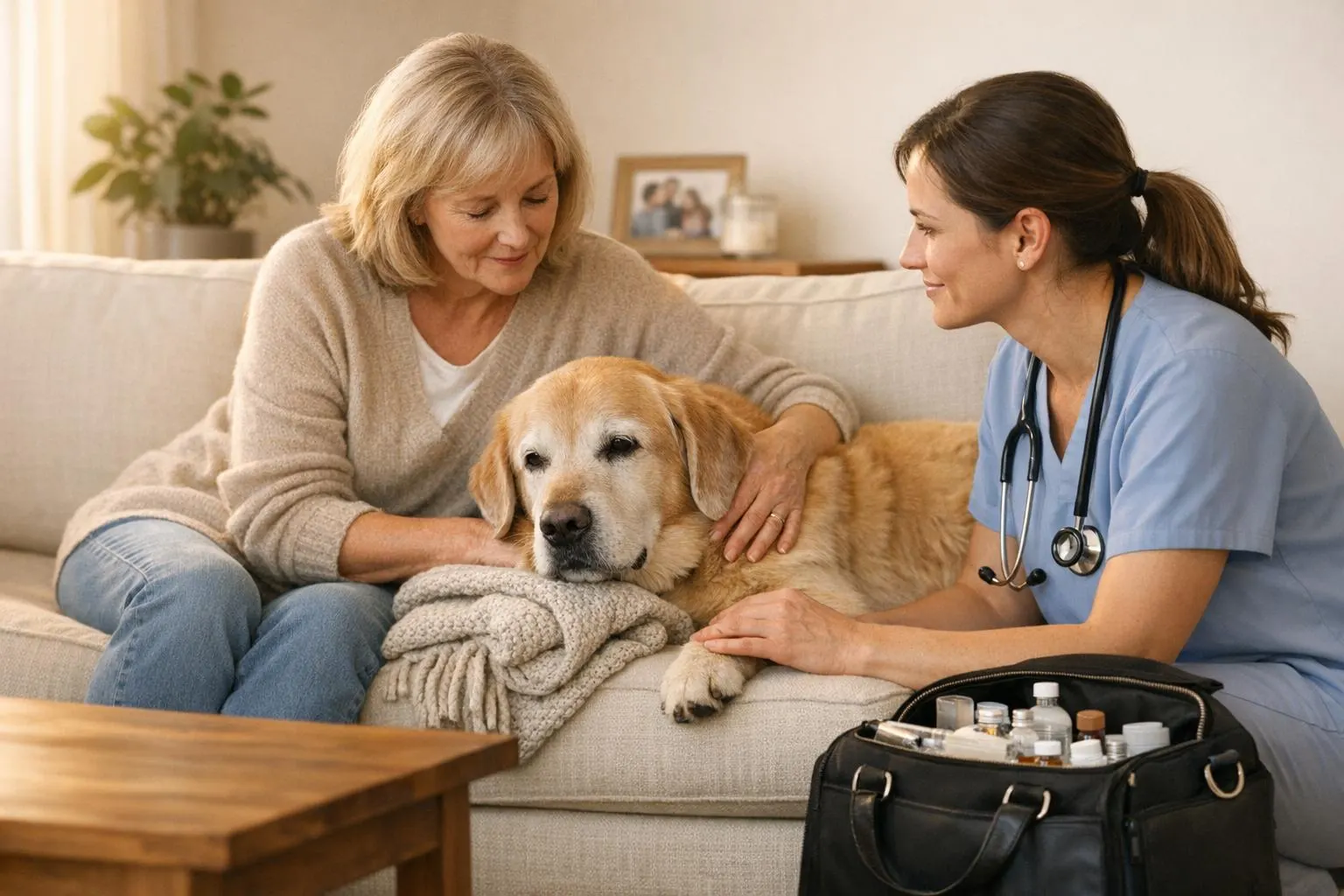
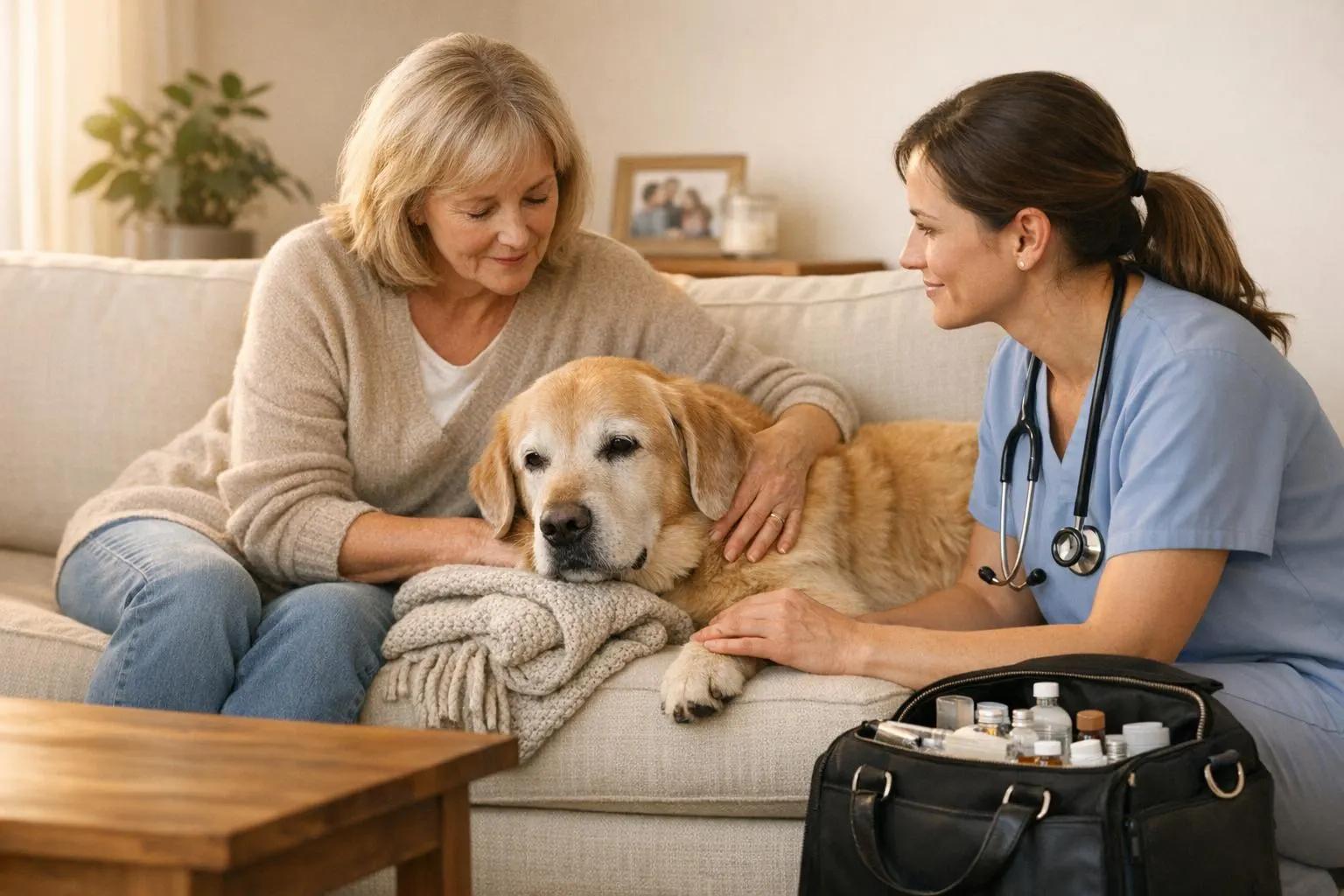
Saying goodbye to a pet is never easy, but in-home pet euthanasia offers a way to make this emotional moment more peaceful and personal. Instead of the stress of a clinic visit, your pet can spend their final moments in a familiar and comforting environment. Here’s why more pet owners are choosing this option:
- Comfort at Home: Pets remain in their favorite spots, surrounded by familiar sights, sounds, and smells.
- No Travel Stress: Avoid the anxiety and physical strain of transportation, especially for elderly or ill pets.
- Personalized Care: Veterinarians take their time, focusing solely on your family and pet.
- Privacy to Grieve: Families can say goodbye without the distractions or discomfort of a public setting.
- Aftercare Support: Services often handle cremation or burial arrangements, easing the burden during a difficult time.
In-home euthanasia prioritizes your pet’s comfort and gives you the space to honor their memory in your own way.
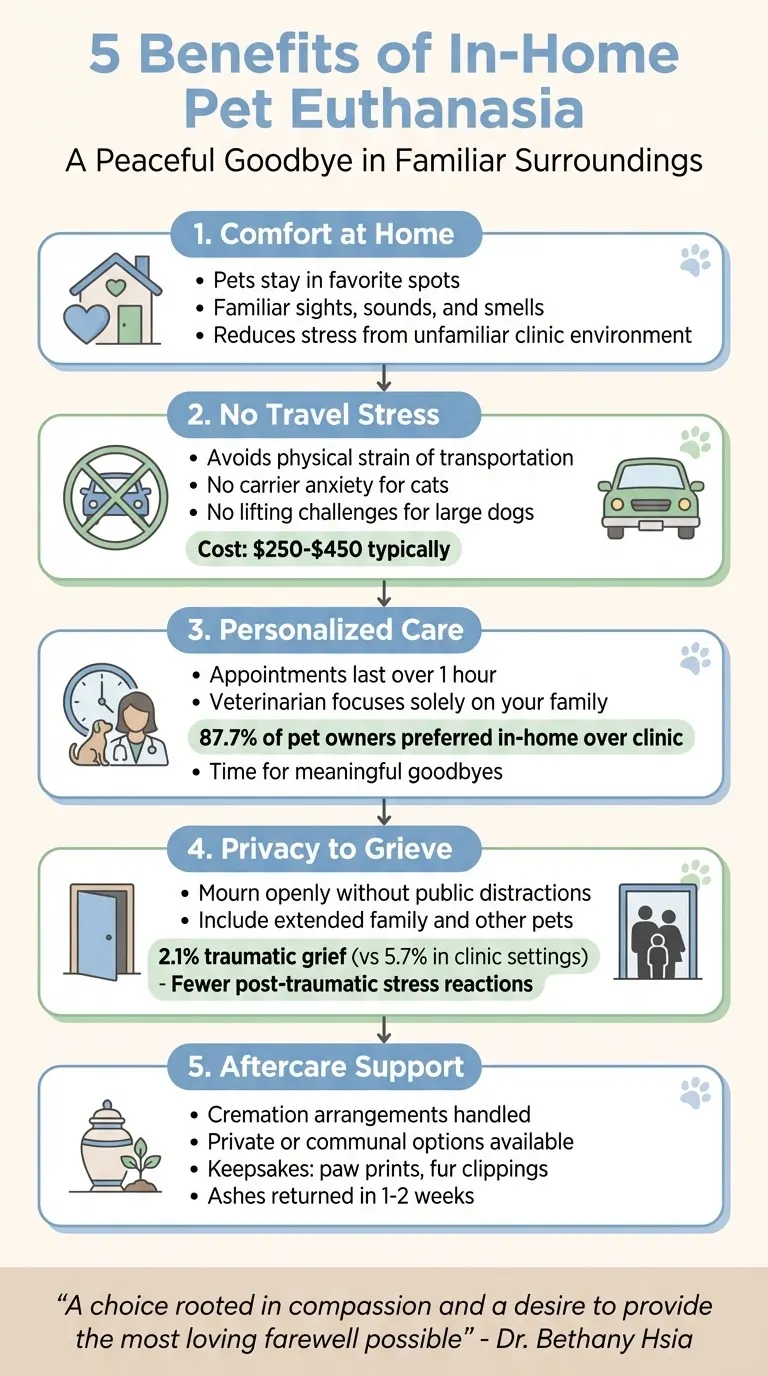
5 Benefits of In-Home Pet Euthanasia for Comfort and Peace
At-Home Pet Euthanasia: How to Give Your Pet a Peaceful Goodbye
1. Comfort in Familiar Surroundings
Spending their final moments at home allows pets to be surrounded by the comforting sights, sounds, and scents they know so well. Whether it’s their favorite sunny spot on the living room floor or a trusted cushion, these familiar touches provide a sense of security that’s hard to replicate in a veterinary clinic.
Veterinary offices often bring stress for many pets due to unfamiliar smells, strange sounds, and the presence of other anxious animals. At home, these stressors disappear, creating a calming environment that helps pets feel more at ease during their final moments. This sense of calm can also have a positive effect on their physical comfort during this time.
"The calm and familiar surroundings, with all the smells, sounds and sights of their home, contribute to their sense of security and peace, ensuring a more gentle and compassionate transition." – Dr. Bethany Hsia
Physical comfort is just as crucial as emotional well-being. At home, pets can rest in their favorite spots - whether it’s their bed, a cozy couch, or a well-loved corner of the house. For pets dealing with chronic pain or mobility challenges, avoiding the strain of being transported in a carrier is a huge relief. As Dr. Sunday Cozzi, a hospice veterinarian, explains, "Unless your pet is reactive to new people in the home, it is almost certainly easier for them to stay in familiar surroundings. Riding in a vehicle requires a lot of strength and balance, typically dwindling at the end of life".
To provide extra comfort, consider placing your pet in their favorite spot and include a cherished item, like a blanket or toy. For pets with cognitive decline or separation anxiety, being in their home with loved ones can ease confusion and fear. Even the presence of other household pets can offer additional comfort during this deeply emotional time.
2. No Stressful Transportation Required
One of the biggest advantages of in-home euthanasia is avoiding the strain of transportation. For elderly or terminally ill pets, a trip to the veterinary clinic can be physically draining and emotionally overwhelming. As hospice veterinarian Dr. Sunday Cozzi explains, "Riding in a vehicle requires a lot of strength and balance, typically dwindling at the end of life. Even pets that may have enjoyed a trip to the vet's office in the past may find it stressful and uncomfortable".
The challenges don’t stop at the car ride. Large-breed dogs that can no longer walk or stand often endure pain when being lifted into a vehicle, which can even lead to aggression . Cats, on the other hand, frequently experience extreme anxiety when placed in carriers, sometimes panicking before the journey even begins . For pets dealing with cognitive decline, the confusion and fear caused by transportation can be especially distressing .
The emotional toll extends to pet owners as well. Many find the final car ride to be one of the most heart-wrenching parts of the process. Dr. Erica Dickie shares, "The drive home without him was gut-wrenching". In-home euthanasia removes this painful experience, giving families the chance to say goodbye in a peaceful, familiar environment.
Beyond the emotional benefits, staying home reduces risks for both pets and their owners . The cost of in-home euthanasia typically ranges from $250 to $450, covering the veterinarian's travel, time, and supplies. This approach offers a more compassionate and convenient option for end-of-life care.
3. More Time and Personal Attention
In-home euthanasia appointments typically last over an hour, giving veterinarians the ability to focus entirely on your pet and family without the pressure of a packed clinic schedule. This extended timeframe is a stark departure from the often hurried nature of clinic visits, where multiple patients and tight time slots can limit the level of personal care.
The home environment also eliminates the distractions common in clinics. Dr. Amir Shanan, founder of the International Association of Animal Hospice and Palliative Care, highlights this difference:
"The clinic setting is limiting. In general, households are a much more personal interaction with the client. They are in an environment that is more conducive for them to express their feelings, more so than in the clinic."
This focused, uninterrupted time creates space for families to say goodbye in meaningful, personalized ways. Some families choose to play soft music, read poetry, or offer their pet a favorite treat in their final moments. In one example, a pet was sedated poolside to honor their unique comfort preferences. Having this extra time allows everyone - children, other pets, and extended family - to say their goodbyes at their own pace, fostering a more natural grieving process.
Cristen Prenez, whose Golden Retriever Max received in-home care from Dr. Lynn Hendrix, shared her experience:
"It was a long experience, but in a good way. She recapped all the steps. Everyone was loving on Max. He was comfortable."
In fact, a survey found that 87.7% of pet owners who opted for in-home euthanasia preferred it over an in-clinic procedure by a significant margin.
sbb-itb-a4e988d
4. Privacy for Families
In-home euthanasia doesn't just provide comfort and personalized care - it also ensures the privacy needed for a deeply personal farewell. Saying goodbye to a cherished pet is one of the most emotional moments for any family, and being at home offers a safe space to grieve openly, away from the distractions and discomfort of a public clinic. Dr. Erica Dickie, a mobile hospice veterinarian, puts it beautifully:
"The privacy of home allows you to mourn your loss as openly as you need. It can also be a deeply meaningful experience, filled with love, ceremony, and memorialization."
Contrast this with a clinic environment, where families often feel the need to hold back their emotions. The presence of strangers, ringing phones, or barking dogs can make the experience feel rushed or impersonal. On top of that, walking through a busy reception area immediately after saying goodbye to your pet can be an incredibly painful and isolating experience. In-home euthanasia eliminates these challenges, allowing for a more intimate and peaceful farewell.
Your home also provides the flexibility to include extended family, close friends, or even other pets in the goodbye. Unlike the often cramped space of a clinic exam room, your home accommodates everyone who wants to share in this meaningful moment.
There’s research to back up the emotional benefits of this privacy. A cross-sectional study revealed that families who experienced euthanasia reported fewer traumatic grief symptoms (adjusted difference -5.29) and fewer post-traumatic stress reactions (adjusted difference -2.79) compared to those who experienced natural deaths. The study also found that traumatic grief was more than twice as common in the natural death group (5.7%) compared to the euthanasia group (2.1%).
This private, uninterrupted time allows you to focus entirely on your pet's final moments, ensuring a farewell that is both dignified and filled with love.
5. Aftercare Support Options
After saying a private and heartfelt goodbye, the next step is deciding on aftercare. In-home euthanasia services often streamline this process, offering seamless support to help you focus on grieving without added stress. Mobile veterinarians typically arrange aftercare during or right after the procedure, sparing you the hassle of extra planning.
Cremation tends to be the most chosen aftercare option. With private cremation, your pet is cremated individually, and their ashes are returned in an urn you select. On the other hand, communal cremation involves cremating multiple pets together, with the ashes respectfully scattered in a shared area. While private cremation allows for a more personal tribute, communal cremation offers a dignified and cost-conscious alternative.
Veterinarians generally handle the transportation of your pet’s remains, eliminating the need for you to visit a crematory. If you opt for private cremation, the ashes are typically ready within one to two weeks and can be delivered to you, shipped, or picked up at the clinic.
Many providers also offer keepsakes to honor your pet, such as clay paw prints or fur clippings, giving you something tangible to remember them by. Services like Animal Aftercare provide nationwide, 24/7 support, including pet cremation with a tagging system to ensure your pet's remains are treated with care and returned to you.
It's helpful to discuss aftercare options with your family before the appointment so you can make thoughtful decisions without feeling rushed. If you’re considering a home burial, check local city or county regulations to confirm it’s allowed. This comprehensive approach ensures that the care and respect shown during in-home euthanasia extend seamlessly into aftercare.
Conclusion
Opting for in-home pet euthanasia provides a peaceful and dignified goodbye, all within the comfort of your pet's familiar surroundings. The five key advantages - being at home, avoiding stressful travel, receiving personalized care, having privacy for your family, and access to thorough aftercare - combine to make this a deeply compassionate choice. As Dr. Bethany Hsia, Co-founder of CodaPet, puts it:
"The decision to choose in-home pet euthanasia goes beyond convenience - it is a choice rooted in compassion and a desire to provide the most loving farewell possible".
This approach ensures your pet remains in a space they know and love, making their final moments as calm and meaningful as possible. It also allows you to say goodbye on your own terms, free from the time constraints of a clinic or the discomfort of a public setting. Whether you choose to play soft music, say a prayer, or simply share quiet moments together, the process can be tailored to what feels right for you and your family.
After saying goodbye, having thoughtful aftercare is just as important. Services like Animal Aftercare offer nationwide support for pet cremation, ensuring your pet's remains are treated with the utmost respect. Their team understands the emotional weight of this time and works to make the process as smooth as possible, so you can focus on honoring your pet's memory.
This compassionate approach prioritizes your pet's comfort and dignity, ensuring their final moments are filled with love and peace.
FAQs
How do I know it’s time to consider euthanasia?
Deciding when to consider euthanasia for a beloved pet is one of the hardest choices a pet owner can face. Some key indicators include ongoing pain, noticeable suffering, or a significant decline in your pet’s ability to enjoy daily routines like eating, walking, or playing. Behavioral shifts, such as increased anxiety or a lack of responsiveness, may also signal that their quality of life is deteriorating.
Talking with a veterinarian can provide clarity during this emotional time. They may recommend using quality-of-life scales to assess your pet’s comfort and overall well-being. These tools can guide you in making a decision that prioritizes your pet’s dignity and peace.
What happens during an in-home euthanasia visit?
During an in-home euthanasia visit, a veterinarian provides the service in the comfort of your home, creating a familiar and soothing environment for your pet. They’ll walk you through the process, answer any questions, and start by giving your pet a sedative to help them feel calm and at ease. Once your pet is relaxed, the veterinarian administers the necessary medications to gently and peacefully let them rest, giving you time to say your goodbyes in a private and compassionate setting.
What aftercare choices do I have for my pet’s remains?
When it comes to saying goodbye to your beloved pet, there are a few thoughtful options for handling their remains. Cremation is a popular choice, and it can be done in two ways. If you choose individual cremation, you’ll have the option to keep your pet’s ashes in a special urn or keepsake. Alternatively, communal cremation is available, though the remains are not returned.
Some services go a step further by offering memorial keepsakes. These can include items like clay paw prints or small vials containing your pet’s fur. These heartfelt mementos provide a meaningful way to honor your pet’s memory during a challenging time.