


Losing a pet is heartbreaking. For many, pets are family, and their loss can trigger deep emotions like sadness, guilt, or loneliness. Studies show that 25–30% of pet owners experience clinical grief symptoms, which can last months or even years. Unlike grieving for humans, pet loss often lacks societal support, making it harder to navigate.
This guide offers practical advice to help you:
- Manage grief: Allow yourself to feel emotions and reflect on memories.
- Adjust routines: Replace pet-related habits with new rituals.
- Address guilt: Reframe self-blame through self-compassion and reflection.
- Honor your pet: Create memorials or engage in meaningful activities.
- Care for your health: Focus on sleep, nutrition, and gentle movement.
Healing takes time. Simple daily steps - like journaling, connecting with others, or creating a memory space - can help you process your loss while keeping your pet’s memory alive.
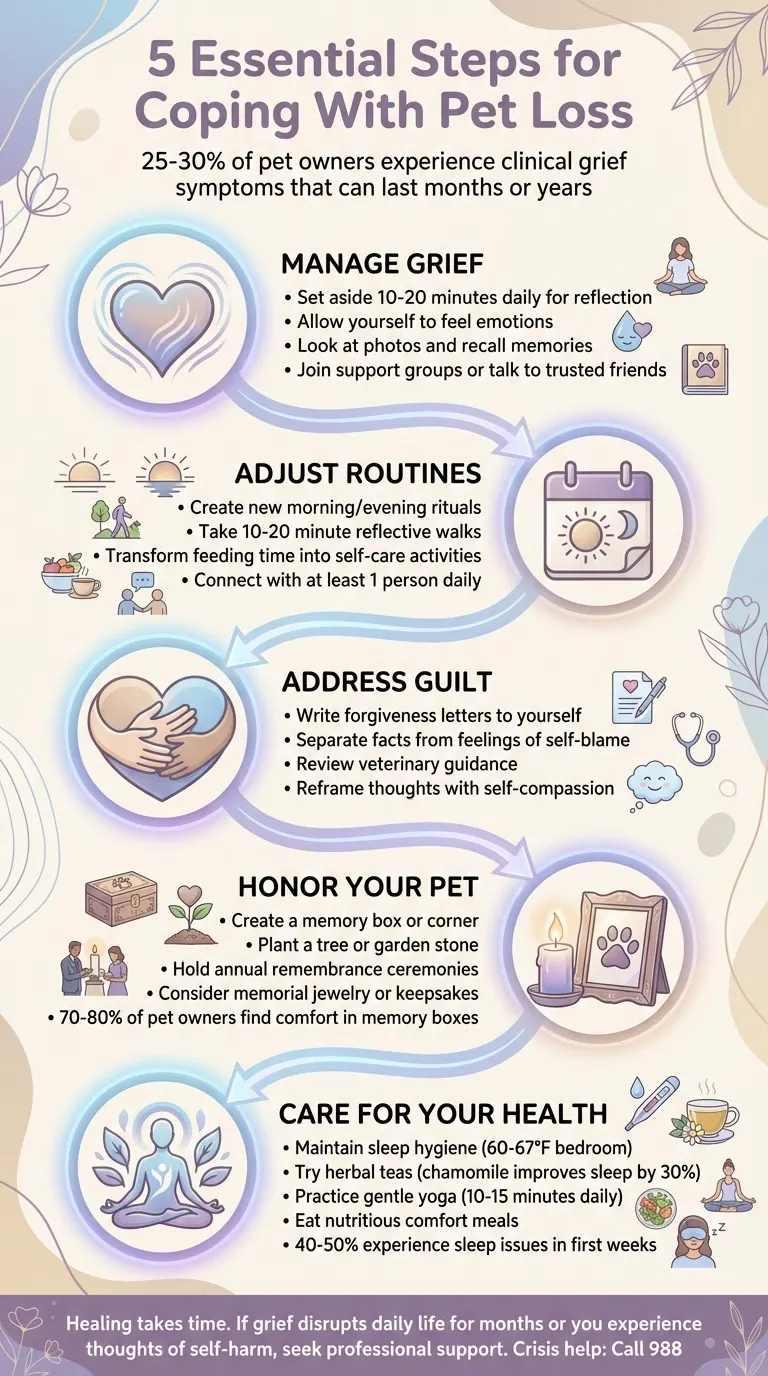
5 Essential Steps for Coping With Pet Loss and Grief
Struggling with Pet Loss | 7 Steps to Help Cope
Managing Sadness and Emotional Numbness
Losing a pet can leave you feeling deeply sad or emotionally shut down. You might find yourself crying often or experiencing a heavy ache in your heart. On the other hand, some people feel numb, as if they're just going through the motions. This numbness can be your mind's way of shielding you from the full weight of grief. Understanding that these reactions are normal is an important step toward healing.
One of the hardest but most important parts of healing is allowing yourself to face the pain instead of avoiding it. Pushing the pain away may seem easier, but it often slows the healing process. Giving yourself permission to feel - even the tough emotions - can help you process your loss more effectively. Try setting aside 10–20 minutes each day to reflect on your pet. Look at photos, think about your favorite memories, or simply sit quietly with your feelings. These small moments can help you work through your grief.
It’s also common to withdraw after losing a pet. You might avoid social situations, skip activities you used to enjoy, or spend a lot of time alone because your home feels emptier. While isolation can feel comforting at first, try turning those quiet moments into opportunities for gentle self-expression. Grief tends to come in waves, gradually softening over time. But if sadness or numbness begins to disrupt your daily life for months on end, reaching out to a professional can make a big difference.
Daily Emotional Release Practices
If you’re feeling emotionally shut down, incorporating simple daily rituals can help release pent-up emotions. Start with intentional expressions of emotion. Let yourself cry, talk to your pet as if they were still with you, or find safe ways to release your feelings - like through light physical activity. Sharing your grief with a trusted friend or joining a pet-loss support group can also validate your emotions and make you feel less alone.
Journaling can be a powerful tool. Write down one favorite memory each day or track your emotions with prompts like, “Today I felt... because...” Paying attention to small sensory details - like the sound of your pet’s paws or the way they greeted you - can help keep their memory alive. Writing a letter to your pet can also be a meaningful exercise. You might want to express gratitude, share updates, or even say goodbye. This practice can help you work through feelings of guilt, regret, or longing.
When grief feels overwhelming, try calming your nervous system with the 4-7-8 breathing technique. Sit comfortably, rest your tongue against the ridge behind your upper front teeth, and exhale gently. Then inhale through your nose for 4 counts, hold your breath for 7 counts, and exhale with a soft whoosh for 8 counts. Repeat this cycle four times. You can practice this once or twice a day, or whenever your emotions feel particularly intense.
Gentle movement can also help release emotional tension. Consider taking a walk along a path you used to share with your pet, doing some light stretching, or engaging in a bit of exercise. Even a short 10-minute walk each day can help you reconnect with your feelings and release stress. Over time, these small acts can help you move through your grief without feeling completely overwhelmed.
Dealing With Disrupted Routines and Loneliness
The loss of a pet often leaves a noticeable void in your daily life. Those familiar routines - morning walks, feeding times, or evening cuddles - are suddenly gone, creating an emptiness that can feel overwhelming. The quiet in your home may seem louder than ever, and you might catch yourself instinctively reaching for a leash or filling a food bowl before the reality of your pet's absence sets in.
For many, this loss is more than just the absence of a companion. Pets often play a key role in facilitating social interactions - whether it’s chatting with neighbors during walks or meeting others at the dog park. Without these moments, loneliness can deepen, especially if your pet was your primary source of connection. According to research shared by HelpGuide, having face-to-face contact with at least one person a day can help combat feelings of isolation and encourage a more positive outlook after losing a pet. If you find yourself withdrawing from social activities, struggling with daily tasks, or feeling hopeless for an extended period, it may be time to seek support from a mental health professional or a pet loss counselor.
Losing a pet also impacts your sense of identity. As a caregiver, your role was tied to their needs, and their absence can leave you questioning where you fit now. Recognizing the moments when their absence feels most profound - like mornings without a walk or evenings without their comforting presence - is an important step in reshaping your routines.
Rebuilding Structure With Pet-Inspired Habits
To navigate the disruptions, consider creating new rituals that honor your pet while helping you regain a sense of structure. For example, take a 10–20 minute walk along a familiar or peaceful new route, dedicating this time to reflect on your pet. At the start of your walk, think of one thing you cherished about them. You could even capture a meaningful moment - a favorite tree or a sunrise - as a way to remember them. End the walk with a simple thought, like "Thank you for everything", to gently close the ritual.
Morning and evening routines can also be reimagined to bring comfort. Set an alarm for a "morning check-in" and enjoy a cup of coffee or tea while looking at a favorite photo of your pet. Use what was once feeding time for a self-care activity, like preparing a nutritious breakfast, to help counteract the appetite loss or low energy that often accompanies grief. Similarly, transform the time you used for play into light exercise or a reflective walk, allowing these new routines to bring stability to your day.
Incorporating cherished memories into your daily life can also be healing. Create a small "memory corner" with a framed photo or a special item that belonged to your pet, and spend a few moments there each day. You might also set up a photo slideshow on your phone to view during your morning routine or start a "story of the day" habit, where you recall a funny or heartwarming memory about your pet before bed. These practices can help shift your grief into a lasting connection.
Social interaction plays a key role in healing as well. Make it a goal to connect with at least one person each day - whether it’s a walk with a neighbor, coffee with a friend, or joining a community class. Talking with other pet lovers who understand your loss can be especially comforting. If reaching out feels overwhelming, start small with a brief phone call or video chat, and let a trusted friend know you’re struggling so they can check in with you during the week.
Support groups, both online and in person, can provide a safe space to share your feelings. Local meetings organized by veterinary schools, animal shelters, or counseling centers offer opportunities to connect with others who’ve experienced similar losses. For those particularly tough nights, pet loss hotlines are available to help you through.
When the intensity of your grief begins to ease - whether it takes weeks or months - volunteering at a local shelter or supporting animal-related causes can help you rediscover a sense of purpose.
If your pet’s passing involved euthanasia or professional aftercare, working with a compassionate provider can help alleviate some of the logistical and emotional strain. Services like Animal Aftercare offer nationwide support for pet cremation, equine cremation, and euthanasia, ensuring these moments are handled with care and respect. With these details managed thoughtfully, you can focus on creating healing rituals and honoring your pet’s memory.
These gentle, pet-inspired habits can help restore structure to your days while keeping the bond with your beloved companion alive.
Coping With Guilt and Regret
Rebuilding after the loss of a pet often involves confronting feelings of guilt and regret. These emotions are especially common when end-of-life decisions, like euthanasia, are part of the experience. It’s natural to replay moments and question your actions - wondering if you acted too soon, too late, or if you could have done more. While these thoughts can feel overwhelming, they are a normal part of grieving and do not mean you failed your pet.
Many pet owners wrestle with guilt over missing early signs of illness, facing financial limitations, or not being present at the end. However, guilt in these situations often reflects the depth of your love rather than any actual wrongdoing. Mental health professionals suggest separating the facts - such as your pet’s age, condition, and the advice of your veterinarian - from the feelings of self-blame. Taking time to review what you knew at the time, the guidance you received, and your pet’s quality of life can help you see that your decisions were made with care and love.
Treat yourself with the same compassion you’d offer a friend. Instead of harsh self-criticism like, “I failed my pet,” try reframing your thoughts: “I made a loving decision with my vet’s guidance to ease their suffering.” If guilt continues to dominate your life for weeks or disrupts your daily routines - affecting your work, sleep, or relationships - consider speaking with a grief counselor or therapist. Seeking professional help is especially important if guilt leads to thoughts of self-harm or reliance on substances like alcohol or drugs to cope.
Reframing Guilt Through Compassionate Reflection
Writing can be a powerful way to work through guilt and begin the process of forgiveness. One helpful exercise is writing a forgiveness letter to yourself. In this letter, outline the facts of your pet’s situation, acknowledge your feelings of guilt, and remind yourself that your decisions were rooted in love. You can choose to keep the letter or release it symbolically, such as by tearing it up or burning it safely.
Another meaningful exercise is writing a letter to your pet. Use this opportunity to express your apologies, gratitude, and love. Share what you wish you could have said on their final day, reflect on the moments you cherished most, and explain your regrets while imagining how your pet might understand your choices. This practice can help shift your perspective from self-judgment to self-compassion.
If you’re still struggling with doubt, reviewing veterinary records can provide reassurance. Schedule a follow-up conversation with your veterinarian to revisit your pet’s diagnosis, test results, and care options. Questions like, “Was there anything realistic that could have changed the outcome?” may help confirm that your decisions were both compassionate and appropriate. Hearing a professional reaffirm that your pet was suffering and that your choices were humane can ease lingering doubts.
When painful memories of your pet’s final moments surface, try redirecting your thoughts to happier times. Keeping a list of three to five positive memories to reflect on during these moments can be incredibly helpful. Many experts recommend focusing on the broader, loving experiences you shared with your pet, rather than fixating on the difficult end.
Professional aftercare services can also provide comfort by ensuring your pet’s remains are treated with dignity and respect. For example, Animal Aftercare offers nationwide pet and equine cremation and euthanasia support, emphasizing empathy and care. Their services include private or communal cremation and memorial keepsakes like urns and paw prints, helping you feel confident that your pet is being honored properly. As Animal Aftercare explains:
We recognize that losing a pet is comparable to losing a friend. We pledge to provide you with peace of mind by offering a sympathetic, truthful, and dependable service.
This type of support can help ease the burden of wondering, “Did I do the right thing?” and guide you toward a more peaceful farewell.
As you work toward self-forgiveness, channeling regret into meaningful actions can deepen your healing. Consider donating a small amount (such as $10–$25), volunteering at a local shelter, or raising awareness about recognizing early signs of illness. These steps not only honor your pet’s memory but also help you find a sense of purpose and peace.
sbb-itb-a4e988d
Addressing Physical Symptoms of Grief
Losing a pet doesn’t just weigh on your heart - it takes a toll on your body, too. Grief triggers your stress response, flooding your system with hormones like cortisol and adrenaline. These can throw off your sleep, zap your energy, and even mess with your appetite. Research on bereavement shows that 40–50% of people grieving experience sleep issues in the first few weeks after a loss. You might find yourself lying awake, replaying memories, feeling drained despite resting, or noticing changes in how much - or how little - you want to eat.
These reactions are your body’s natural response to stress. High stress hormones can lead to disrupted sleep and low energy, often accompanied by headaches, digestive troubles, and general fatigue.
Taking care of your physical health can help you heal. The American Veterinary Medical Association highlights the importance of rest, proper nutrition, and regular movement to give your body the tools it needs to recover. Simple self-care routines can go a long way in helping you regain balance.
Body-Focused Self-Care Practices
Addressing these physical symptoms starts with small, intentional steps. Begin with improving your sleep habits: Stick to a regular bedtime, create a calming pre-sleep routine - dim the lights, avoid screens, and skip caffeine after 2:00 PM. Keep your bedroom cool (around 60–67°F) and dark. If your mind won’t stop racing, try progressive muscle relaxation. Slowly tense and release each muscle group, starting at your toes and working up to your head, focusing on the sensations rather than your thoughts.
Herbal teas can also help you relax without relying on medication. Chamomile tea, for example, has been shown to improve sleep quality by 30% in stressed individuals. Valerian root provides a gentle sedative effect, while lavender tea may naturally lower your heart rate. To prepare, steep 1 teaspoon of dried herbs in 8 oz. of boiling water for 5–10 minutes, and enjoy 2–3 cups about 30–60 minutes before bed.
Even if you’re not feeling hungry, eating nourishing meals can make a big difference. Focus on simple, comforting foods that still provide your body with what it needs. Think oatmeal topped with banana and nuts, a smoothie with spinach, yogurt, and berries, or a warm vegetable soup with lean chicken - these options can offer steady energy and lift your mood.
Gentle yoga is another way to ease physical tension while helping with emotional stress. Yoga can reduce cortisol levels, the stress hormone. Start with simple poses like Child’s Pose (hold for 5 minutes), Legs-Up-the-Wall (10 minutes before bed), or 10 rounds of Cat-Cow. You don’t need to be a yoga expert - just find a quiet space and move slowly, letting your body guide you.
| Self-Care Practice | How It Helps |
|---|---|
| Sleep hygiene routine | Balances stress hormones and aids emotional recovery |
| Herbal teas (chamomile, valerian, lavender) | Encourages relaxation and improves sleep quality |
| Nutritious comfort meals | Boosts energy and supports mood |
| Gentle yoga (10–15 minutes daily) | Relieves stress and eases physical tension |
The key here isn’t perfection - it’s consistency. A simple daily routine that includes a few minutes of sipping tea, stretching through yoga, or enjoying a light, nourishing snack can make a world of difference. Your body is working hard to cope with this loss, so giving it rest, proper nourishment, and gentle movement is essential for recovery.
Creating Memorials for Your Pet
As you work through the emotional process of healing and adjusting to life without your pet, creating a memorial can provide a meaningful way to honor their life. These tributes serve as physical reminders of your pet’s presence and can help turn feelings of deep sadness into moments of positive reflection. In fact, studies show that 70–80% of grieving pet owners find comfort in creating memory boxes or photo albums. Such memorials not only celebrate your pet’s life but also offer a pathway toward emotional connection and healing.
Memorials don’t have to be complicated or costly. Simple gestures like planting a tree in your yard, setting up a small shrine at home, or putting together a scrapbook filled with cherished memories can be deeply meaningful. Some people find solace in writing a heartfelt letter to their pet, sharing all the things they wish they could say one last time, and then tucking it away in a special spot.
The most important part of creating a memorial is making it personal. There’s no set timeline for when or how to do this - you might feel ready right away, or it could take weeks or even months. What matters most is that the memorial reflects the unique bond you shared with your pet.
DIY Memorials & Rituals
If you’re looking for a hands-on way to honor your pet, DIY projects can be a meaningful option. For example, you could create a memory box filled with items like your pet’s collar, favorite toy, paw print, photos, and a handwritten note recalling your favorite moments together. Whether you choose to display it in a private space or somewhere more visible, it can serve as a comforting daily reminder.
Some people find healing in annual remembrance ceremonies. Pick a significant date - perhaps your pet’s adoption anniversary or birthday - and gather loved ones to share stories and honor their memory through a special ritual.
For those considering cremation, Animal Aftercare offers 24/7 compassionate pet and equine cremation services. They provide individual cremation with a 100% assurance tagging system, ensuring your pet is treated with dignity and respect. Once you receive the ashes, there are many ways to create a personalized tribute. You could scatter the ashes in a favorite outdoor spot, keep them in a decorative urn, or even turn them into memorial jewelry. As one customer, Greg, shared:
Their attention to detail and respectful handling of our pet's remains provided us with solace during a difficult time.
Additional ideas include creating paw-print artwork, donating to a charity in your pet’s name, or engraving a garden stone. Engaging in these creative acts - whether arranging a memory box, planting flowers, or crafting something special - can help release emotions while keeping your pet’s memory alive and close to your heart.
Long-Term Healing Strategies
Healing after losing a pet is about finding a way to embrace the loss while cherishing their memory. The approaches outlined here - expressing emotions regularly, reshaping your routines, practicing self-compassion to address guilt, taking care of your physical health, and creating meaningful memorials - can help you move from intense grief toward a more balanced "new normal."
To track your journey, consider a weekly check-in with yourself. Ask questions like, "What felt a little easier this week?" or "Which strategies have been most helpful?" By staying mindful of your progress, you may notice subtle changes over time: fewer moments of intense sadness, a sense of warmth when looking at their photos, or improvements in sleep and appetite. These gradual changes, rather than the complete absence of grief, are signs that healing is happening.
As you build on these small steps, focus on cultivating self-compassion. Instead of thinking, "I should be over this by now," try a gentler perspective: "This pain reflects how deeply I loved them, and healing takes time." Grieve in ways that feel right to you - whether through quiet reflection, rituals, or creative outlets. Remember, waves of grief are normal, especially around anniversaries or unexpected reminders. These moments don’t mean you’re starting over; they’re simply part of the process.
Sometimes, professional support can be a crucial part of healing. If you find yourself feeling hopeless, consumed by guilt, or having thoughts of self-harm, reaching out to a licensed mental health professional is essential. For immediate support during a crisis, call 988 or your local emergency services.
As emotional healing unfolds, consider pairing it with practical steps. Honor your pet's memory by choosing respectful aftercare through providers like Animal Aftercare. Then, channel your love into meaningful actions - volunteer, donate, or create a legacy project in their name. Combining emotional and practical efforts can pave the way for lasting healing.
FAQs
How can I deal with feelings of guilt after choosing euthanasia for my pet?
It's completely normal to feel a sense of guilt after making the decision to euthanize your pet. But it’s important to remember that this choice came from a place of love and compassion - a decision made to spare them from further pain and suffering. Allow yourself to feel and process your emotions; grieving is a vital step in finding peace.
Try to focus on the joyful memories you created together and the love and care you gave them throughout their life. If you’re struggling, consider reaching out to a pet grief counselor or joining a support group where you can connect with others who understand what you’re going through. Be gentle with yourself during this time, and don’t hesitate to seek professional help if you feel you need extra support.
How can I adjust to changes in my daily routine after losing a pet?
Losing a pet can leave a noticeable void in your daily life, but taking small, intentional steps can help you find your footing again. Start by creating a steady routine for essentials like meals, exercise, and rest. Having this structure can bring a sense of normalcy during an emotionally tough period.
Find comfort in activities that soothe or distract you - whether it’s taking a walk, picking up a new hobby, or jotting down your thoughts in a journal. Reach out to friends, family, or even support groups to share your feelings; sometimes, just talking can make a big difference. If you feel overwhelmed, consider seeking guidance from a professional counselor. Healing is a gradual process, so give yourself the time and grace you need to adjust.
How does creating a memorial help with grieving after losing a pet?
Creating a memorial for your pet is a heartfelt way to cherish their memory and keep their presence alive in your life. It provides a physical reminder of the love and happiness they brought, offering a space to reflect and find comfort as you work through the grieving process.
This could take many forms - a cherished keepsake, a special corner in your home or garden, or a personalized tribute. Whatever you choose, a memorial allows you to honor the unique bond you shared and find a sense of peace through remembering the joy they brought to your world.