
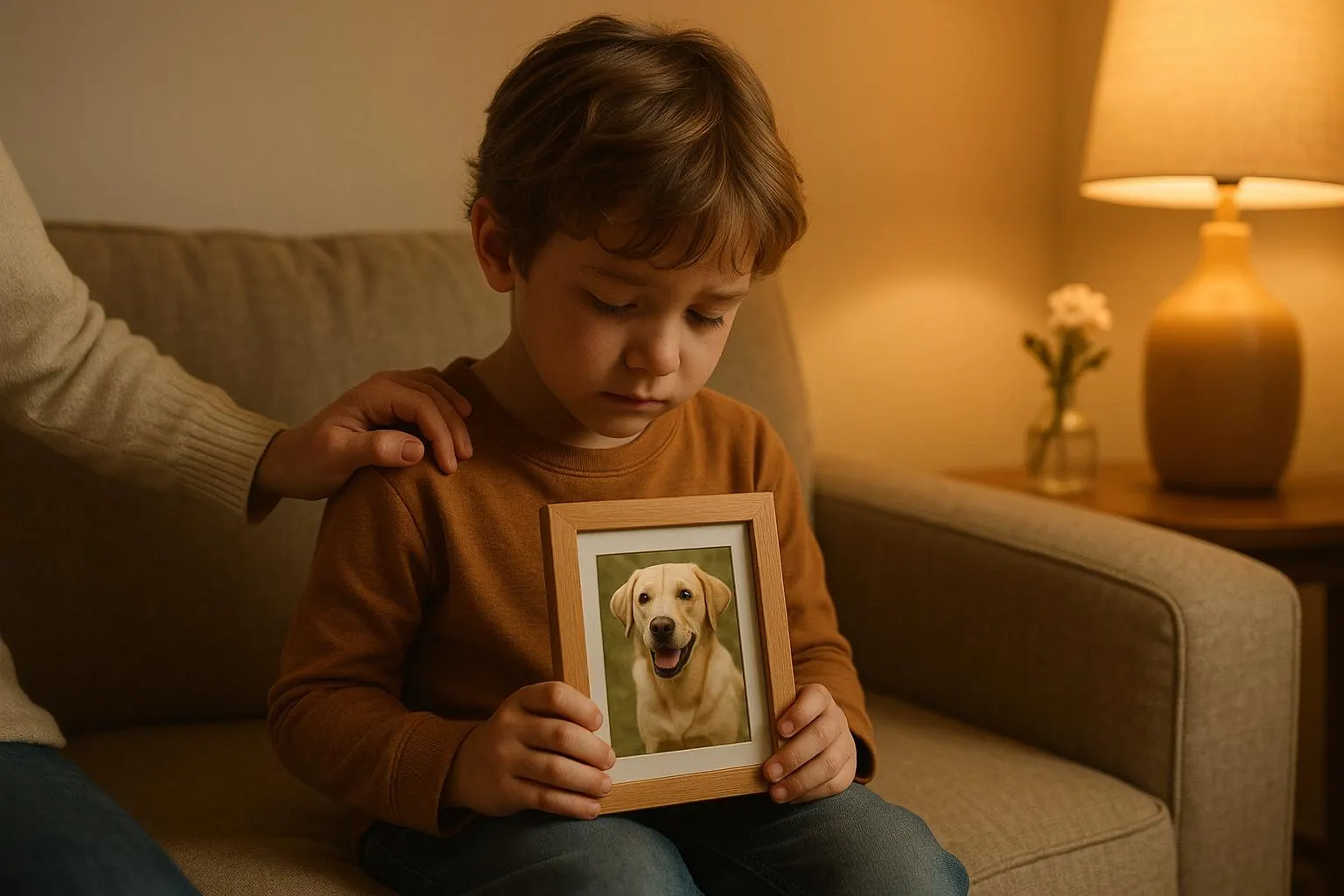
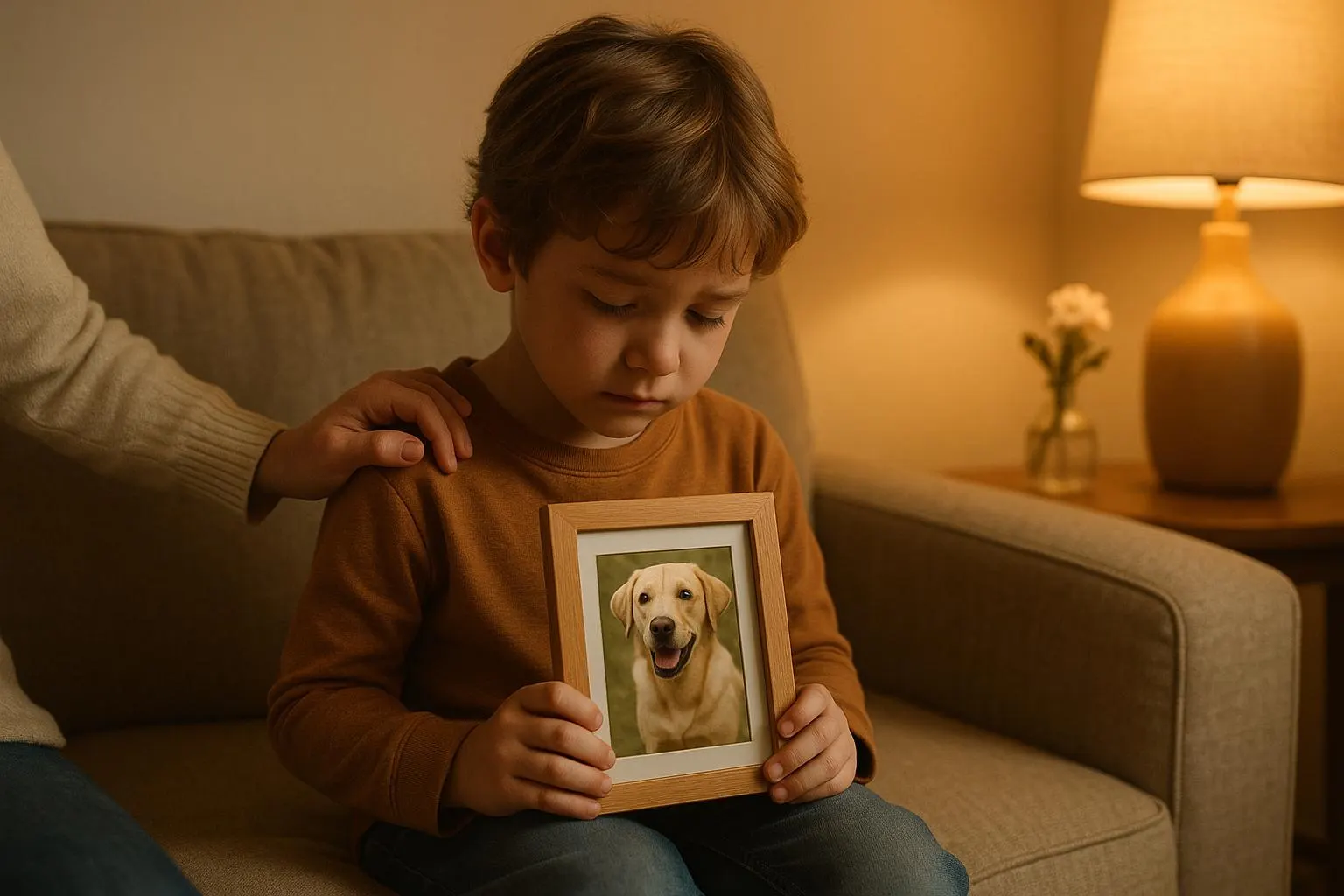
Losing a pet can be deeply emotional for children, often leading to feelings of guilt. These emotions may stem from irrational self-blame or misunderstandings about the pet’s death, especially in younger kids who might engage in "magical thinking." Here's how you can help your child navigate these feelings and focus on healing:
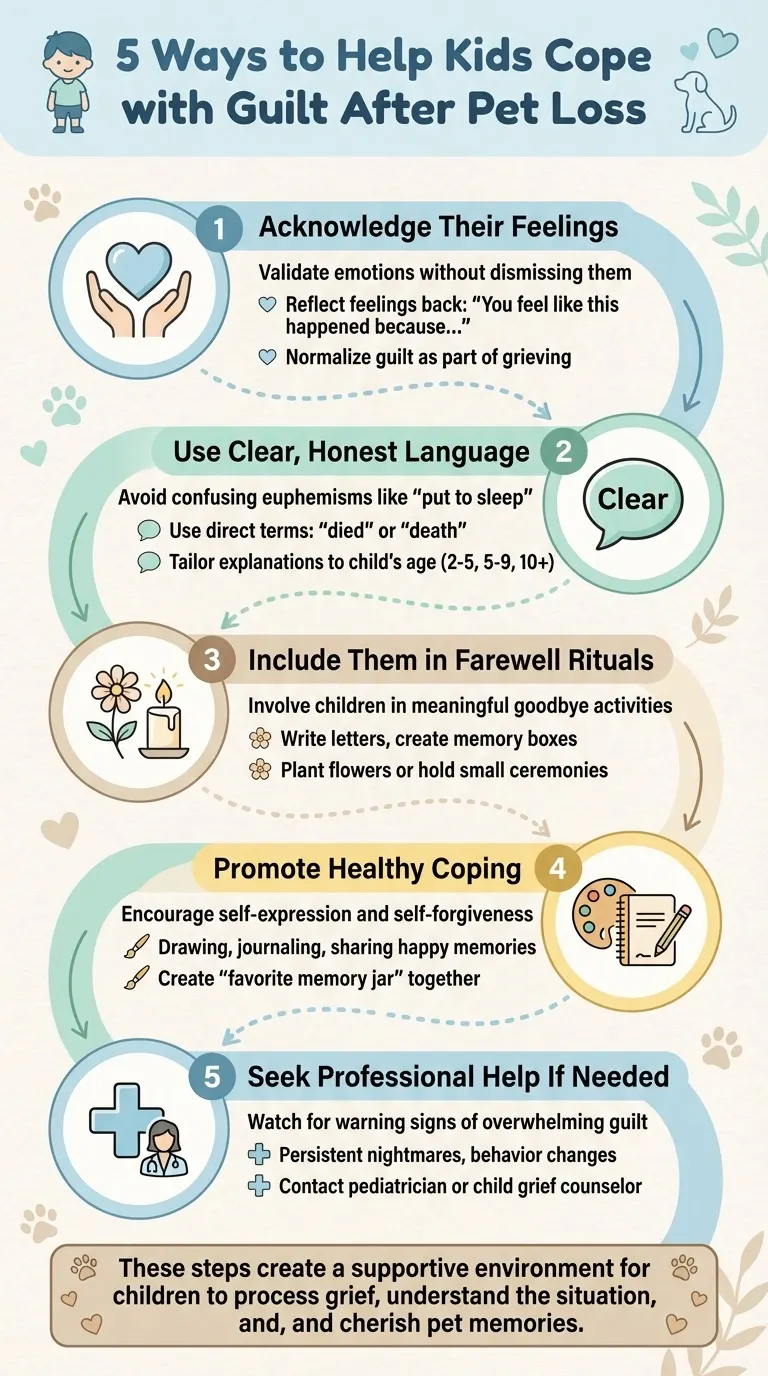
- Acknowledge Their Feelings: Validate their emotions without dismissing or correcting them too quickly.
- Use Clear, Honest Language: Avoid euphemisms like "put to sleep" that can confuse children; explain the loss in age-appropriate terms.
- Include Them in Farewell Rituals: Allow them to participate in activities like writing letters, planting flowers, or creating memory boxes.
- Promote Healthy Coping: Encourage self-expression through drawing, journaling, or sharing happy memories.
- Seek Professional Help If Needed: Watch for signs of overwhelming guilt or behavioral changes, and consider therapy if necessary.
These steps create a supportive environment for children to process their grief, understand the situation, and cherish the memories of their pet.
5 Steps to Help Children Cope with Guilt After Pet Loss
How to Explain Pet Loss to Children and What NOT to Do!
Why Children Feel Guilty After Losing a Pet
A child's age greatly influences how they understand death and process guilt. For children under five, death often feels temporary - like the pet is merely "sleeping" or "gone away" for a while. At this stage, their thinking is shaped by imagination, and they might believe their thoughts or small actions can control events. For instance, if a toddler felt frustrated and wished their pet would "stop bothering me", they might wrongly think that their wish somehow caused the pet to disappear.
Children between ages 5 and 9 are especially prone to intense feelings of guilt. They still connect their thoughts and emotions to real-world events, which can lead to misunderstandings about cause and effect. According to UC Davis Veterinary Medicine, kids in this age group often replay moments of impatience - like yelling at the pet, resenting the responsibility of caring for it, or wishing it would go away - and may conclude that these feelings contributed to the pet’s death. For example, a seven-year-old who briefly wished their dog would "go away" during a tough moment might feel immense guilt when the pet later dies naturally, believing their thought played a role.
Older children and teens, on the other hand, have a clearer understanding of death's permanence. But they can still internalize blame, often in more complex ways. They might obsess over missed opportunities, thinking, "If only I had played with it more, it wouldn’t have died", or, "I should have noticed it wasn’t feeling well sooner". Everyday oversights - like forgetting to feed the pet once or not being there when the pet needed comfort - can lead to spiraling self-blame when the pet passes from illness or old age. These patterns of thought may signal when guilt is starting to overshadow normal grief.
It’s important to keep an eye out for signs that guilt is becoming overwhelming. If a child continues to blame themselves for more than a month or two, or frequently says things like, "It’s all my fault", additional support may be necessary. Behavioral changes such as nightmares, regression, anger, changes in appetite or sleep, or withdrawing from social activities are also warning signs. UCLA Health highlights other red flags, like drawings or play that focus heavily on death, acting out, or disrupted daily routines, as indicators that professional help may be needed.
Parents play a vital role in helping children navigate these emotions. Using unclear phrases like "put to sleep" or expressing their own guilt can unintentionally make children feel responsible. Instead, offering straightforward and honest explanations about the pet’s death - whether due to old age, illness, or injury - can help shift the child’s focus from self-blame to understanding.
1. Acknowledge and Accept Their Feelings
Understanding how children experience guilt is key to helping them process it. The first step is to acknowledge and validate their emotions. For instance, if your child says, "It's my fault Buddy died", resist the urge to correct them right away. Instead, reflect their feelings back to them: "You feel like this happened because you didn’t walk him yesterday." This approach shows your child that their emotions - no matter how difficult - are safe to share with you.
It's important to help normalize guilt as part of the grieving process. Reassure your child that feeling guilty doesn’t mean they’ve done something wrong or that their thoughts caused harm. You might say, "Feeling guilty just shows how much you cared about Daisy. It doesn’t mean you did anything bad." For younger children, who may engage in magical thinking, be clear and direct: "Even if you wished you didn’t have to feed him, that wish didn’t make him die. Your thoughts can’t cause things like that to happen."
Using supportive language can help your child separate their emotions from the facts. You could say, "It’s okay to feel sad or wish things had gone differently. That doesn’t mean you’re responsible", or "You can share any thoughts or feelings with me. I won’t be upset." These kinds of statements validate your child’s feelings while gently correcting any misconceptions about blame.
It also helps to share your own emotions in a calm and honest way. Saying something like, "I’m crying because I miss Rocky, and it’s okay for us to feel sad together", shows that grief is a normal, shared experience. This can make your child feel less isolated in their feelings and more comfortable expressing their own regrets or "what ifs."
Check in with your child regularly using gentle prompts like, "How are you feeling about Luna today?" or "Have you been thinking about anything new?" Some kids may want to talk, while others might prefer to draw pictures or repeat the same questions over and over. By embracing their individual way of grieving, you reinforce that their feelings are valid and that you’re there for them when guilt becomes overwhelming.
Acknowledging their emotions in this way creates a safe space for deeper support as they navigate their grief.
2. Give Clear, Age-Appropriate Explanations
When a pet passes away, it's important to provide children with clear, straightforward answers. Avoid using phrases like "put to sleep" or "went to heaven", as these can confuse young children. For example, they might start fearing bedtime or believe their pet will return. Experts from UC Davis Veterinary Medicine and UCLA Health suggest using direct terms like "death" or "died" to help children process the loss and maintain trust when they eventually learn the truth.
Tailor your explanation to your child's age and level of understanding.
For younger children, ages 2–5, keep it simple. You might say something like, "Max was very sick and couldn’t get better, so he died." For kids aged 5–9, you can include more details, such as, "The vet gave Fluffy medicine to help with her pain because she was very sick, and now she isn’t hurting anymore." Older children can handle more in-depth explanations, like, "The cancer couldn’t be treated", or "The injuries from the accident were too serious for the doctors to fix."
If euthanasia was the choice, explain it in a compassionate way: "We gave Buddy medicine to stop his pain because he was too sick to recover." This approach helps children understand the decision was made out of love and kindness, not blame or neglect.
Choose a calm moment to explain, and be prepared to revisit the conversation. Children often process loss gradually, so repeating the same facts consistently can prevent misunderstandings or feelings of guilt.
Finally, don’t hide your own grief. Sharing your sadness shows children that it’s okay to feel pain and mourn a loss. By being open about your emotions while explaining what happened, you provide both the truth and the reassurance they need to grieve in a healthy way. This openness helps them understand that grief is a natural and shared part of life.
3. Include Kids in Memorial or Goodbye Rituals
Involving children in memorial rituals can be a comforting way to help them process grief and ease feelings of guilt. According to the Ohio State University Veterinary Medical Center, "involving children throughout the process will most likely alleviate fears and anxieties" about a pet's passing, including any guilt they might feel about their role in the situation. By participating in these rituals, kids can feel that their bond with the pet is acknowledged, giving them a sense of closure rather than leaving them with lingering questions.
Simple, creative activities are often the most meaningful. Encourage your child to write a letter to the pet, draw a favorite memory, or put together a scrapbook filled with photos and keepsakes. The Association for Pet Loss and Bereavement points out that making scrapbooks and art about the pet can create positive associations, helping to soften feelings of guilt and sorrow over time. Another idea is to hold a small family ceremony in a special place, such as your backyard. Light a candle, share cherished stories, or let your child place a favorite toy next to the pet’s photo. These acts not only honor the pet’s memory but also provide a pathway for healing.
You can also create a living memorial to keep the connection alive. For example, planting a tree, flowers, or a small garden in the pet's honor can be a beautiful way to remember them. Involve your child in every step - let them dig the hole, pick the plant, and water it together. Explain how this symbolizes love and memories "continuing to grow." Children's Mercy Hospital suggests that rituals like planting flowers or creating art help children maintain a bond with their pet, rather than feeling pressured to "move on" too quickly.
If you’re using a pet aftercare service, consider involving your child in selecting memorial options, such as engraved urns or paw-print keepsakes from Animal Aftercare. These tangible items provide a comforting way for children to focus on remembering their pet with love rather than guilt.
Finally, wrap up each ritual with a gentle reminder about the true cause of the pet's passing. This honest conversation helps counter any "magical thinking" younger children might have, where they might blame themselves for the loss. Combining open communication with meaningful activities allows children to express their emotions, understand the situation better, and find peace in saying goodbye.
sbb-itb-a4e988d
4. Encourage Healthy Coping and Self-Forgiveness
Once you've acknowledged your child's feelings and included them in meaningful goodbye rituals, the next step is helping them navigate guilt through activities that promote healing. Creative expression can serve as a powerful outlet, especially for emotions that may be hard for children to articulate. Simple activities like drawing pictures of the pet, keeping a journal, or reminiscing about happy memories can gently guide their focus away from guilt and toward gratitude.
For instance, encourage your child to draw or paint their pet and then discuss the picture together. This gives them a way to process difficult emotions without needing to find the "right" words. Older children might prefer journaling - writing short entries like, "My favorite thing about Max was..." or "I felt sad today when I saw Max's bowl." These activities provide a safe space for self-expression and can help lay the groundwork for self-forgiveness.
Helping your child forgive themselves involves shifting their perspective. If they say something like, "It's my fault because I forgot to give her water once", acknowledge their feelings but gently remind them of the bigger picture. You might say, "Think about all the times you fed her, played with her, and cared for her. One small mistake didn’t make her sick." This approach helps them see the full scope of their love and effort, rather than fixating on isolated moments. You could even work together to create a list of all the ways they cared for the pet - feeding, walking, playing, or even reading to them - and display it somewhere visible as a comforting reminder.
Another idea is to create a "favorite memory jar." Each family member can write down a happy or funny memory involving the pet and add it to the jar. When feelings of guilt creep in, your child can pull out a memory to revisit the joy and love they shared. Alongside these creative activities, physical movement can also help release pent-up guilt and tension. Encourage activities like running, dancing, or even a family walk. Sticking to regular meal and bedtime routines can also provide a sense of stability and comfort during this emotionally challenging time.
If your child continues to struggle with guilt - especially if it leads to recurring nightmares, noticeable behavior changes, or difficulties at school - it might be time to seek additional support from a pediatrician or child counselor. Professional guidance can provide the extra tools needed to help your child heal.
5. Seek Professional Support When Needed
While family support and personal coping strategies are invaluable, there are times when professional help becomes essential. Pay attention to warning signs like persistent nightmares, frequent stomachaches or headaches, noticeable changes in sleep or appetite, a significant drop in school performance, or ongoing self-blame. For instance, if your child continues to say, "It's my fault the pet died", and remains unconvinced despite your reassurances, it may be time to consider additional support.
Other concerning behaviors include regression, such as bedwetting or becoming unusually clingy. Intense separation anxiety or any mention that life feels unbearable without the pet are critical signals to seek immediate mental health assistance. In urgent situations, parents can reach out to the 988 Suicide & Crisis Lifeline, which also provides chat and text options.
Professional counseling can play a pivotal role in helping children navigate their emotions. Child grief counselors or therapists are trained to use clear, age-appropriate language to explain difficult concepts and address feelings of guilt. For younger children, play therapy allows them to express emotions non-verbally. Elementary-aged kids might find comfort in creating memory books, while teens often benefit from open conversations and relaxation techniques. These approaches, tailored to a child’s developmental stage, work hand-in-hand with the coping strategies you provide at home.
Professional support doesn’t just address immediate emotional needs - it equips children with practical tools to manage feelings of guilt or sadness. Start by consulting your child’s pediatrician for referrals to mental health professionals. Informing teachers or school counselors about the loss can also be helpful, as they can monitor your child’s behavior in the school setting. Additionally, many pediatric hospitals, hospice services, and veterinary schools offer grief support programs tailored for children and families. Organizations like the Association for Pet Loss and Bereavement or services such as Lap of Love provide online resources and support groups specifically designed to help families cope with the loss of a beloved pet.
When introducing the idea of therapy to your child, frame it as a helpful resource rather than a consequence. Describe a therapist as a "feelings helper" who can teach them special ways to handle big emotions. Reassure your child that many kids work with therapists after experiencing a significant loss and emphasize that you’ll be there to support them every step of the way. Professional guidance not only validates your child’s feelings but also shows them that healing is achievable with the right tools and support system.
Using Memorial and Aftercare Rituals
Memorial rituals can be a meaningful way to help children move from feelings of guilt to celebrating the bond they shared with their pet. Activities like creating a memory box - filled with items such as photos, a pet’s collar, drawings, or sympathy cards - allow kids to channel their emotions into a positive and creative outlet. Hosting a small farewell ceremony in the backyard, where family members share favorite stories or plant flowers, can also provide a sense of closure. These moments help reinforce that grief is a natural part of life and honor the pet’s memory in a respectful way.
For children aged 5–9, these activities are especially important. At this age, kids may engage in “magical thinking,” mistakenly believing their thoughts or actions somehow caused their pet’s death. Hands-on activities like these can help redirect those misconceptions and encourage healthy emotional expression.
Using clear and simple language, such as saying the pet "died", helps ensure children understand what has happened without placing blame on themselves. Services like Animal Aftercare, which offers respectful pet cremation and euthanasia with 24/7 nationwide support, can provide families with compassionate care during this challenging time. Combining clear explanations with memorial rituals gives parents a thoughtful way to help children process their loss.
Parents play a key role in guiding these rituals and sharing their own feelings openly. Whether it’s framing a favorite photo for your child’s room or holding a candle-lighting gathering, including children in these acts of remembrance reassures them that they are not alone in their grief. These rituals transform loss into a heartfelt tribute, helping families create lasting memories of their beloved pet.
Conclusion
Helping your child navigate feelings of guilt starts with a few key steps: acknowledge their emotions, use clear language like "died" to explain the situation, involve them in goodbye rituals, encourage self-forgiveness and healthy coping strategies, and seek professional support when necessary. These actions can gently guide your child away from self-blame and toward healing.
Children often experience guilt due to "magical thinking", but this fades with time, honest reassurance, and understanding. Experts highlight that clear explanations, opportunities to express emotions, and supportive adults can make a significant difference. Gradually, children begin to accept the loss, shifting their focus from blame to memories. They may even start sharing happy stories about their pet and re-engage in daily activities with less distress.
You don’t need a perfect script to help your child. What truly matters is showing up with honesty, patience, and love. Letting them see your own grief can teach them that sorrow is a natural part of life. Taking care of your emotional well-being also strengthens your ability to support your child. By offering clear explanations and participating in shared memorial rituals, you not only help ease their guilt but also create meaningful ways to honor your pet’s memory.
When it’s time to say goodbye, compassionate aftercare services can provide a dignified farewell. Animal Aftercare offers respectful pet and equine cremation and euthanasia services, available 24/7 nationwide. These services can bring closure and help your family process the loss. Over time, your child will move from feelings of guilt to cherishing the memories - holding onto favorite stories and traditions that celebrate how much their pet meant to them.
FAQs
How can I help my child understand and cope with the loss of a pet?
When talking to a child about the loss of a pet, it’s important to use clear and honest words that fit their age and level of understanding. You can gently explain that when a pet dies, their body stops working, and they no longer feel pain or fear. Let them know it’s okay to feel sad and encourage them to talk about their feelings.
You can also help them remember the happy times they had with their pet, reminding them that the love and joy their pet brought into their life will always be a part of them. Reassure them that grieving is a natural process and that you’re there to support them every step of the way.
How can I tell if my child needs professional support after losing a pet?
If your child is showing prolonged signs of distress - like deep sadness, pulling away from friends or activities, difficulty sleeping or eating, or overwhelming guilt - it might be time to consult a professional. These behaviors become more concerning if they last for weeks or start interfering with their everyday life. A mental health expert can offer the guidance and support needed to help your child process their emotions and begin to recover.
What are some meaningful ways kids can express their feelings after losing a pet?
Encouraging kids to channel their emotions through creative activities can be a meaningful way to help them cope with the loss of a pet. They might find comfort in drawing or painting a cherished memory, writing a heartfelt story or poem about their pet, or assembling a scrapbook filled with photos and keepsakes. Planting a tree or flowers in their pet's honor is another thoughtful option, providing a lasting tribute to their furry friend. These activities not only offer children a healthy way to process their grief but also celebrate the unique bond they shared with their companion.