Saying goodbye to a pet is never easy. After euthanasia, here’s what happens:
- The Process: Euthanasia is designed to be peaceful and painless. Sedation ensures your pet is calm before a final injection stops their heart and brain activity.
- Immediate Aftermath: You may notice natural physical changes like open eyes or muscle twitches. These are reflexes, not signs of pain.
- Private Goodbye: Most veterinarians give you time to say your final farewell, whether at home or in a clinic.
- Aftercare Options:
- Private Cremation: Your pet is cremated individually, and their ashes are returned to you.
- Communal Cremation: Pets are cremated together, with no ashes returned.
- Home Burial: Allowed in some areas, but check local regulations.
You can also create keepsakes like paw prints or fur clippings to honor their memory. Grief is a natural part of this process, and support groups or hotlines can help you cope. Services like Animal Aftercare handle logistics with care, offering cremation, transport, and memorial options.
Losing a pet is deeply emotional, but understanding the process and options can help you navigate this challenging time with dignity and love.
What Happens Right After Euthanasia
Physical Changes and Veterinary Procedures
Once the euthanasia medication takes effect, your pet’s heart and breathing stop within seconds or minutes. The veterinarian will confirm this with a stethoscope and note the time of passing. It's important to be aware of some natural physical changes that might occur afterward, as they can be surprising if you’re not prepared. For example, your pet’s eyes may remain open and appear glassy, and their tongue might relax and slightly protrude. Reflexive movements, such as muscle twitches, small jerks, or what are known as agonal breaths, might also occur. These are simply nerve reflexes and not signs of pain or awareness. According to the ASPCA, pets do not experience awareness during euthanasia because they are unconscious before their heart stops.
As the body fully relaxes, some pets may release urine or stool, which the veterinary staff will handle discreetly. The veterinarian will also remove any IV catheter or bandages, clean the area if necessary, and carefully position your pet on a clean surface. This is done with great care and respect, ensuring your pet is treated with dignity. After these steps, you’ll be given the opportunity to spend private, meaningful time with your pet.
Private Time With Your Pet
Following the procedures, most providers understand the importance of allowing you time to say goodbye. Many U.S. clinics and in-home services offer an unhurried, private setting for this moment. Clinics often provide a quiet, comfortable room where you can spend time with your pet. Some even offer a wireless doorbell or call button, so you can notify staff only when you’re ready, giving you complete control over the timing.
For home euthanasia, veterinarians often step into another room or wait outside, allowing you privacy to say your final goodbyes before they prepare your pet’s body for aftercare. This time is yours to hold your pet, speak to them, take a photo, or simply sit quietly - whatever feels right to you. If you have other pets, some experts suggest letting them briefly and safely see your pet’s body. This can help them process the loss and understand what has happened.
The Pet Euthanasia Process, explained
Aftercare Options for Your Pet's Body
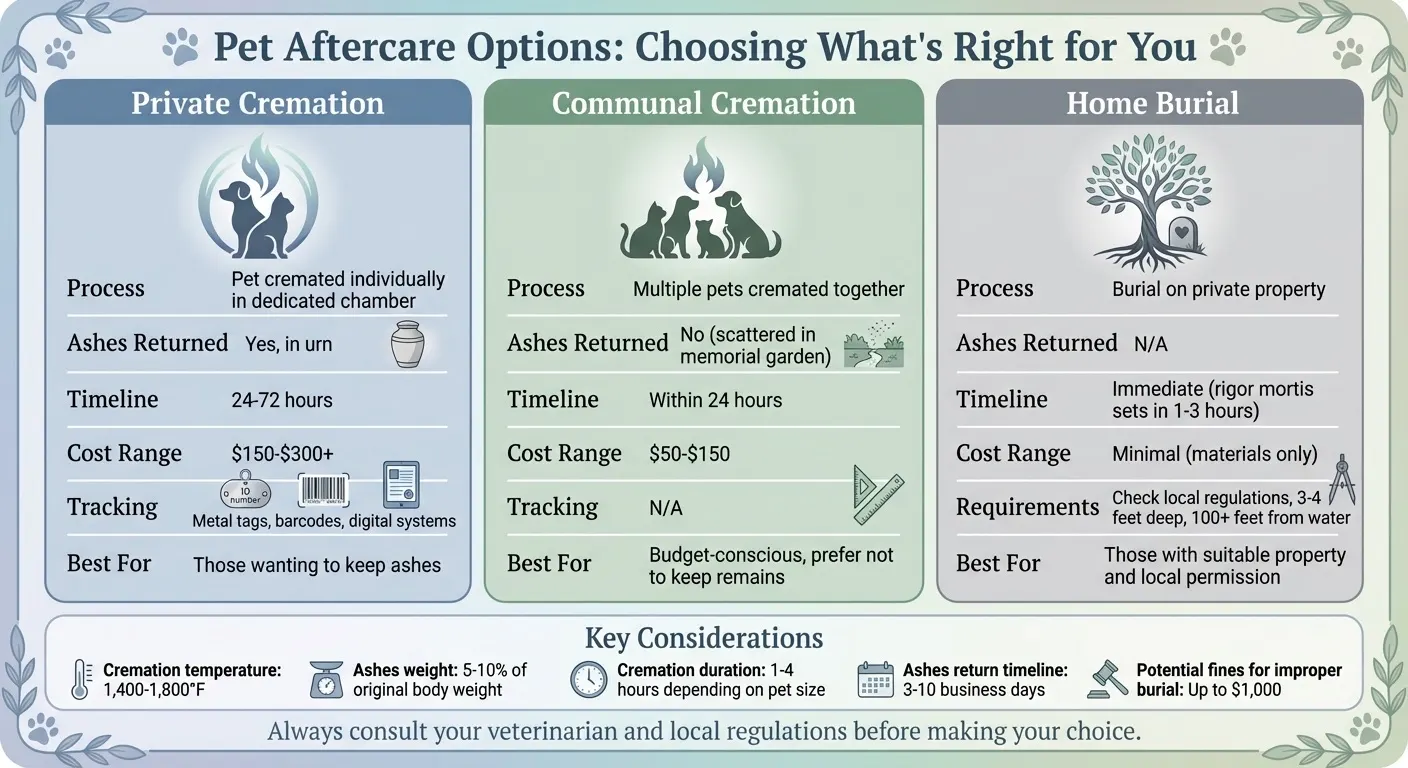
Pet Aftercare Options: Cremation Types and Home Burial Comparison
Choosing how to care for your pet’s body after euthanasia is an important part of saying goodbye and honoring their memory.
Cremation Options: Private vs. Communal
Cremation is the most common choice for pet aftercare in the U.S.. There are two main types to consider: private cremation and communal cremation.
In a private cremation, your pet is cremated individually in a dedicated chamber, and their ashes are returned to you, often in a simple urn. This process typically takes 24–72 hours, depending on your pet’s size and the service provider’s schedule. Reputable providers use tracking systems like metal tags, barcodes, or digital tools to ensure the ashes you receive belong solely to your pet. Costs for private cremation usually range from $150 to $300 or more, with higher prices for larger pets or additional memorial options.
Communal cremation, on the other hand, involves cremating multiple pets together in the same chamber. In this case, individual ashes are not returned. Instead, the combined remains are often scattered in a peaceful memorial garden or similar setting. This option is more budget-friendly, typically costing between $50 and $150, and the process is usually completed within 24 hours. While you won’t receive ashes, communal cremation can be a meaningful choice for those who prefer not to keep physical remains. If cremation doesn’t feel right for you, home burial is another option worth considering.
Home Burial Considerations
Home burial is allowed in most U.S. states on private property, but local regulations can vary widely. Always check your county or city’s rules before moving forward. Urban areas often restrict home burials, and some states may require permits.
If home burial is permitted in your area, here are a few guidelines to follow:
- Bury your pet at least 3 to 4 feet deep to prevent scavengers from disturbing the site.
- Select a location at least 100 feet away from wells, streams, or other water sources to protect groundwater.
- Use biodegradable materials, like towels or blankets, to wrap your pet instead of plastic bags.
- Larger pets may require a deeper grave to ensure the site is secure and properly accommodates their size.
It’s important to note that rigor mortis can set in within hours, causing stiffness. Positioning your pet in a natural, curled pose before burial can make the process easier. Additionally, contact your local health department or animal control office to avoid potential fines, which can be as high as $1,000 in some areas.
Coordinating Aftercare Services
Many veterinary clinics work with aftercare providers to make the process as seamless as possible during a difficult time. For example, Animal Aftercare offers 24/7 nationwide service and can pick up your pet directly from your home or veterinarian’s office. Their team is committed to treating your pet with dignity throughout the process.
When arranging aftercare, be sure to ask about tracking methods, especially for private cremation. Animal Aftercare uses a reliable tagging system to ensure your pet is carefully tracked from pickup to the return of their ashes. They also provide thoughtful memorial keepsakes, such as paw prints, fur clippings, and personalized urns, to help you remember and honor your pet in a meaningful way.
What to Expect During Cremation and Ashes Return
The Cremation Process Explained
Once your pet arrives at the cremation facility, they are gently cleaned and wrapped in a biodegradable shroud. For private cremation, your pet is placed alone in a specially designed chamber, where temperatures reach 1,400–1,800°F. At these high temperatures, organic materials break down, leaving behind bone fragments. These fragments, which typically weigh about 5–10% of your pet's original body weight, are then processed into fine ashes that will be returned to you.
Modern cremation facilities rely on stainless-steel chambers and precise temperature control to ensure the process is handled with care and respect. Depending on the size of your pet, the cremation process usually takes anywhere from 1 to 4 hours.
Timeline and Ashes Return
After the cremation is complete, here’s what you can expect in terms of timelines and receiving your pet’s ashes. Once your pet is picked up - usually within 24–48 hours - the cremation and processing take an additional 1–2 days. You can then expect to receive your pet’s ashes within 3–10 business days, depending on the provider. Ashes can be returned through pickup, mail, or courier services.
Most ashes are returned in a simple wooden or ceramic urn, but many providers offer options for upgraded memorial items if you prefer. Animal Aftercare, for instance, provides 24/7 nationwide delivery with tracking, ensuring your pet’s ashes are handled securely and respectfully. You’ll be notified by phone, text, or email when the ashes are ready, giving you peace of mind about the timing.
Documentation and Keepsakes
Once the cremation process is complete, you’ll receive important documentation along with optional keepsakes to honor your pet’s memory. A certificate of cremation will be provided, confirming the private process. This certificate usually includes your pet’s name, the date of cremation, and a serial number that matches the urn. Some providers may also include chain-of-custody forms, offering additional reassurance that your pet was handled individually and with care.
For those who want a more personal remembrance, many keepsake options are available. These can include clay or ink paw prints, fur or whisker clippings, paw casts, or even custom jewelry containing a small portion of your pet’s ashes. If keepsakes are important to you, it’s a good idea to discuss them ahead of time - either before or during the euthanasia appointment - since some items, like paw prints, need to be prepared while your pet is still present.
sbb-itb-a4e988d
Practical and Legal Guidelines in the United States
Legal Requirements for Burial and Cremation
When planning aftercare for your pet, it’s important to understand the legal requirements surrounding burial and cremation in your area. In the United States, there are no federal laws governing pet remains; instead, state and local regulations dictate what’s allowed. For instance, home burial is generally permitted on private property you own, but local zoning laws may impose restrictions. In states like Texas and Florida, backyard burials on rural land are allowed if the burial site is at least 100–200 feet away from water sources. On the other hand, urban areas in states like California and New York often have stricter rules.
If you’re considering a home burial, it’s a good idea to contact your city or county health department to confirm local requirements. Regulations often specify burial depths between 2–5 feet to prevent scavengers from disturbing the site. Additionally, if you live in an area governed by a homeowners’ association, their rules may impose further limitations. It’s also worth noting that burial may not be an option after a necropsy due to health regulations, which typically require professional disposal through licensed services.
Cremation, on the other hand, is regulated by state environmental and animal disposal laws rather than human crematory standards. Licensed crematories use tracking systems to ensure that ashes from private cremations are returned accurately. For communal cremations, some states, such as New York, require facilities to notify pet owners if ashes will be scattered off-site. To operate legally, all crematories must hold permits from their state’s agriculture department. Knowing these legal requirements is essential if you plan to handle your pet’s remains yourself.
Safe Handling at Home
If you choose to keep your pet’s body at home while awaiting burial or professional services, proper handling is key. Place your pet’s body in a sealed plastic bag on a hard, cool surface (below 40°F). Wrap the body in absorbent material to prevent leakage, and avoid excessive handling to preserve its dignity and any keepsakes. If refrigeration isn’t available, ice packs can be used, but freezing should be avoided to maintain the condition of items like paw prints. Ideally, home storage should not exceed 6–24 hours before arrangements are made.
Rigor mortis begins within 1–3 hours after death, so positioning your pet in a curled, sleeping pose as soon as possible can make transportation easier. For larger pets, consider using a cart or dolly to move the body. Always wash your hands thoroughly after handling your pet to minimize health risks. During transport, cover your pet’s body respectfully to maintain dignity and avoid upsetting others.
How Animal Aftercare Navigates Legalities
Professional services can simplify the process of handling your pet’s remains while ensuring compliance with legal and environmental standards. Animal Aftercare offers nationwide, 24/7 licensed transport and cremation services that adhere to state-specific agriculture department regulations. Their system uses secure ID tags to track your pet from pickup to the return of ashes, minimizing the risk of mix-ups during private cremations.
Animal Aftercare also assists with post-necropsy biohazard clearance in coordination with veterinarians and manages zoning variances for pickups across different jurisdictions. Whether you’re navigating groundwater protection laws in Texas or securing scattering permits in New York, their services include all necessary documentation, such as cremation certificates, to meet your state’s legal requirements. By handling these complexities, Animal Aftercare helps you honor your pet with dignity and respect while easing the burden during a difficult time.
Coping With Grief and Honoring Your Pet's Memory
Understanding Grief and Emotional Responses
Experiencing grief after saying goodbye to a beloved pet is entirely natural. The emotions that follow euthanasia - whether sadness, guilt, anger, or even numbness - can feel overwhelming. Physical signs like fatigue or a loss of appetite often accompany these feelings. According to the American Veterinary Medical Association (AVMA), these reactions are a testament to the deep bond shared with your pet over the years.
While grief typically eases over time, the healing process varies for everyone. If you find yourself struggling with intense feelings like suicidal thoughts, prolonged isolation, or difficulty managing daily life beyond six months, it’s important to seek help from a grief counselor. Remember, there’s no "right" timeline for healing - your journey is as individual as your relationship with your pet.
As you navigate these emotions, creating ways to honor your pet’s life can provide comfort and closure.
Creating Memorials and Keepsakes
Memorializing your pet can be a meaningful way to celebrate their life and keep their memory alive. Framing cherished photos, planting a tree in their honor, or assembling a memory box filled with their favorite belongings are all thoughtful options. Some people find comfort in wearing jewelry containing fur clippings or ashes, offering a tangible way to feel close to their pet. Experts agree that these kinds of rituals can help process grief and promote healing.
For those seeking personalized memorial items, Animal Aftercare provides options such as custom urns, paw print kits, and engraved keepsakes. Their 24/7 nationwide service ensures your pet’s ashes are handled with care, allowing you to create a meaningful tribute in your own space.
Accessing Support Resources
While honoring your pet’s memory, it’s equally important to seek emotional support. You don’t have to face this journey alone. The ASPCA Pet Loss Hotline (877-GRIEF-10) offers trained counselors in the evenings to help you navigate feelings of guilt and sadness. Organizations like Lap of Love Veterinary Hospice provide round-the-clock support, and the Association for Pet Loss and Bereavement (APLB) hosts online chat services.
Online communities such as Reddit’s r/Petloss and Facebook’s "Pet Loss Support Group" connect you with others who understand your grief. Many local humane societies also offer in-person workshops to help you process your emotions. Beyond these resources, journaling, spending time in nature, and practicing self-care through mindfulness or exercise can aid in healing. Some find solace in volunteering at animal shelters or donating to animal welfare organizations in their pet’s name, creating a lasting legacy while finding a sense of purpose.
Conclusion
After navigating the difficult decisions and procedures, the focus naturally shifts to honoring your pet's memory in a way that feels right for you.
Saying goodbye to a beloved pet is one of the hardest things you'll ever do. Choosing a peaceful end, however, reflects the deep love and responsibility you’ve always shown them. Veterinary teams work with care and respect to ensure the process is handled with dignity.
When it comes to aftercare, there’s no one-size-fits-all answer. Whether you opt for private cremation with ashes returned to you, communal cremation as a more affordable option, or home burial, the most important thing is that it honors the bond you shared. Your veterinarian and aftercare providers are there to help you make these decisions with as little stress as possible.
During this overwhelming time, services like Animal Aftercare can take care of the logistics for you. They provide 24/7 nationwide support, arranging transport, cremation options, and memorial keepsakes while ensuring transparent tracking and identification throughout the process. One client shared their experience:
"I can't express enough gratitude for the compassionate service provided by Animal Aftercare. Losing a beloved pet is never easy, but they made the process of saying goodbye a bit more bearable."
- Nancy, Customer
Grief is a natural response to loss. Feelings of sadness, guilt, or even numbness are normal, and healing takes time. There’s no set timeline for grief, and seeking support - from pet loss hotlines, online communities, or grief counselors - is a sign of strength, not weakness.
You don’t have to face this journey alone. Veterinary teams, grief resources, and compassionate aftercare services are here to support you with empathy and respect. May the choices you make and the memories you hold bring you comfort in the days ahead.
FAQs
What happens during the euthanasia process for a pet?
Euthanasia is a process aimed at providing a peaceful and gentle end for your pet, prioritizing their comfort above all else. A veterinarian administers medication that allows your pet to pass away quietly, often in a familiar and calming environment. The procedure is designed to be swift and free of pain, ensuring your pet remains at ease.
Throughout this emotional experience, the veterinary team will be there to support you. They’ll walk you through each step, answer your questions, and offer compassion, helping to bring comfort to both you and your beloved pet during this challenging time.
What’s the difference between private and communal pet cremation, and how do I choose?
The decision between private and communal cremation is deeply personal and depends on how you wish to honor your pet's memory. With private cremation, your pet is cremated alone, giving you the option to receive their ashes for safekeeping or creating a special memorial. In contrast, communal cremation involves cremating multiple pets together, meaning individual ashes are not returned.
When making this choice, think about your bond with your pet, your budget, and whether keeping their ashes holds significance for you. Both options offer a heartfelt way to say goodbye - choose what feels most meaningful for you and your family.
How can I honor my pet’s memory after euthanasia?
Honoring your pet’s memory after euthanasia can be a heartfelt way to celebrate the bond you shared. Many pet owners find comfort in creating personalized mementos, like paw print impressions, custom jewelry, or framed photographs that capture special moments. Some choose to hold a small memorial service, plant a tree or garden as a living tribute, or make a donation to an animal charity in their pet’s name.
Cremation is another option that allows you to keep your pet’s ashes in a meaningful urn or scatter them in a location that holds significance. Professional pet aftercare services are available to guide you through these choices with compassion, ensuring your pet's memory is honored with care and love.