When a horse passes away, choosing between individual and communal cremation is a deeply personal decision. Here's a quick breakdown to help you decide:
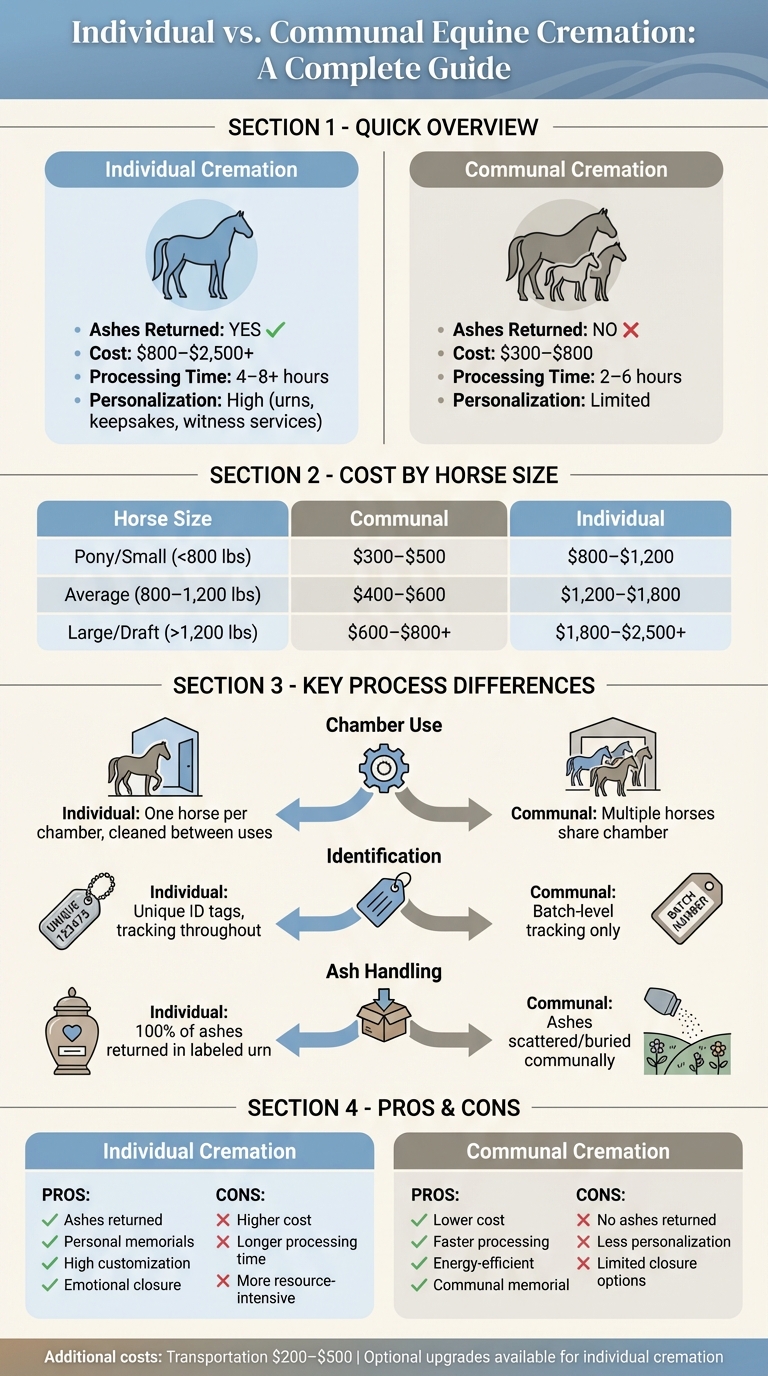
- Individual Cremation: Your horse is cremated alone, and you receive all their ashes. This option costs more ($800–$2,500+) but allows for keepsakes and personalized memorials.
- Communal Cremation: Several horses are cremated together, and ashes are respectfully scattered or buried. This is a more affordable option ($300–$800), but ashes are not returned to you.
Key considerations include cost, emotional closure, and whether you want your horse's ashes returned. Individual cremation offers more personalization, while communal cremation provides a simpler, budget-friendly alternative.
Quick Comparison
| Aspect | Individual Cremation | Communal Cremation |
|---|---|---|
| Ashes Returned | Yes | No |
| Cost | $800–$2,500+ | $300–$800 |
| Processing Time | 4–8+ hours | 2–6 hours |
| Personalization Options | Urns, keepsakes, witness services | Limited |
Whether you choose individual or communal cremation, the goal is to honor the bond you shared with your horse in a way that feels right for you.
Individual vs Communal Equine Cremation: Complete Comparison Guide
Here's Why Horse Cremation Is Becoming So Popular
What is Individual Equine Cremation?
Individual equine cremation involves processing a single horse per chamber, ensuring that the ashes remain entirely separate from those of other animals. This method provides peace of mind to horse owners, as it eliminates any possibility of remains being mixed.
To handle the size and weight of a horse - often exceeding 1,000 pounds - specialized cremation chambers are required. These chambers are designed with reinforced floors, wide doors, and higher fuel capacity. Facilities also use equipment like mechanical lifts, large gurneys, or hoists to safely and efficiently transfer the horse into the chamber.
A key part of the process is maintaining a strict chain of custody. Each horse is assigned a unique identification tag, such as a metal disk or fireproof marker, that stays with it throughout the entire procedure. This ensures that the ashes returned to the owner are exclusively those of their horse.
The chamber operates at temperatures between 1,400°F and 1,800°F for a duration tailored to the horse's size. After the cremation is complete and the chamber has cooled, the remains are carefully collected and processed into a fine, uniform consistency. Given the larger volume of ashes, the remains are often divided into multiple urns.
Because of the horse's size and denser bones, the cremation process takes significantly longer than it does for smaller animals. This requires extended operating and cooling times, as well as dedicated scheduling to handle each horse individually while maintaining precise tracking. These detailed procedures highlight the differences between individual and communal cremation options, particularly in terms of cost and the memorialization experience.
What is Communal Equine Cremation?
Communal equine cremation is a process where multiple horses are cremated together in a single chamber without separation. Because of this, the resulting ashes are mixed and cannot be returned to individual families. Instead, the cremation provider typically takes responsibility for the combined remains, often scattering or burying them in a designated memorial garden. Some facilities maintain these gardens as long-term spaces for remembrance, while others may offer sea-scattering, sometimes sharing details of the scattering with the families involved.
This option is often chosen for its affordability and straightforward approach. By using a shared chamber, energy and operational costs are reduced, making it a practical choice for owners who are comfortable with a collective memorial.
If you’re considering communal cremation, it’s a good idea to ask your provider about how the shared ashes are handled and whether visiting the memorial site is allowed. Having this information ensures the process aligns with your wishes and provides clarity on how your horse will be honored. This approach highlights the differences between communal cremation and individual options, both in terms of cost and memorialization.
Key Differences in the Cremation Process
The chamber setup is one of the most noticeable differences between individual and communal cremation. For individual cremation, a single chamber is dedicated to one horse at a time. The facility cleans and prepares the space specifically for your animal, often using a special lift or trolley to accommodate the horse's size and weight. In communal cremation, multiple horses are placed together in a shared chamber, with the group tracked as a batch rather than by individual animal.
The identification process further sets these methods apart. Individual cremation involves strict tracking protocols, such as unique ID tags - commonly metal discs or barcodes - that stay with the horse throughout the process. This is often paired with paperwork checks and, in some cases, video documentation to ensure the returned ashes belong solely to your horse. Some facilities even allow families to witness the cremation. Communal cremation, on the other hand, does not use individual identification systems since the animals are cremated together. As a result, separating or tracking ashes by individual animal is not possible.
When it comes to ash handling, the procedures vary significantly. After an individual cremation, the chamber is cooled, and the remaining bone fragments are carefully processed and placed in a labeled urn. This ensures that 100% of your horse's ashes are returned to you. In communal cremation, all ashes are removed together at the end of the cycle and are respectfully scattered in a memorial garden, buried, or placed at sea. However, these ashes are not separated or returned to individual owners.
The duration of the process also differs. Individual cremation typically takes 4 to 8 hours or more for a horse weighing over 1,000 pounds. This extended time is due to the complete cycle, which includes cooling and dedicated ash processing. Communal cremation, being more time-efficient, usually takes 2 to 6 hours per cycle since multiple animals are cremated together, reducing overall processing time.
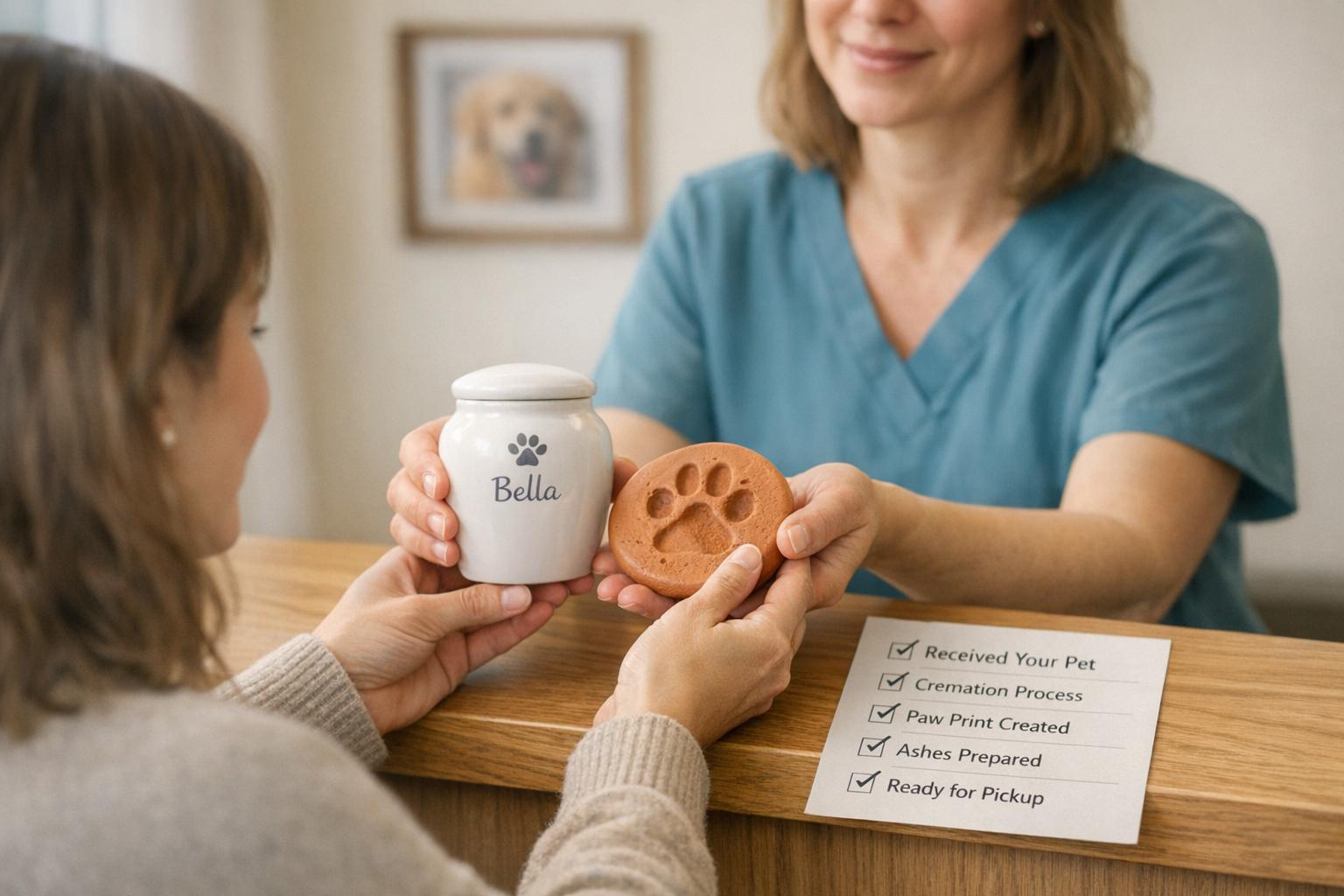
Both methods emphasize respectful handling, though they express it in different ways. Individual cremation often includes options for keepsakes such as mane or tail clippings, hoof prints, and personalized urns. Some facilities also offer witness services. Communal cremation, while less personalized, may include memorial services or communal monuments. Some facilities provide families with details about the scattering ceremony, such as its location and date, offering a symbolic way to honor the horse's memory.
The table below provides a clear comparison of these differences:
Process Comparison Table
| Aspect | Individual Cremation | Communal Cremation |
|---|---|---|
| Chamber Use | One horse per chamber; cleaned and prepared for each animal | Multiple horses share a chamber; no physical separation |
| Identification | Unique ID tags, paperwork checks, tracking from start to finish | Batch-level tracking only; no individual ash ID |
| Ash Handling | Ashes processed separately and returned in a labeled urn | Ashes are commingled and scattered or buried communally |
| Duration | 4-8+ hours per horse | 2-6 hours per cycle (multiple horses) |
| Personalization | Options for keepsakes, urn selection, and witness services | Communal monuments or memorial services |
| Ashes Returned | Yes, 100% of your horse's ashes | No, ashes are not returned individually |
sbb-itb-a4e988d
Cost Comparison: Individual vs. Communal Cremation
Understanding the cost differences between individual and communal cremation is an essential part of deciding which option works best for you.
Individual cremation costs typically range from $800 to $2,500+, while communal cremation is more affordable, falling between $300 and $800. The price variance largely depends on the horse's size. Individual cremation involves a dedicated chamber, a longer process, and the return of the ashes, which all contribute to the higher cost.
Horse Size as a Key Factor
The size of the horse plays a significant role in pricing for both cremation types:
- Pony or small horse (under 800 lbs): Individual cremation costs around $800–$1,200, while communal cremation ranges from $300–$500.
- Average riding horse (800–1,200 lbs): Expect to pay $1,200–$1,800 for individual cremation or $400–$600 for communal.
- Large draft horses (over 1,200 lbs): Costs increase to $1,800–$2,500+ for individual cremation and $600–$800+ for communal options. Larger animals require more fuel, chamber time, and specialized handling.
Transportation Costs
Transportation fees, ranging from $200 to $500, apply to both individual and communal cremation. Many providers include pickup within a certain radius, but additional charges often apply for longer distances, especially in rural areas. After-hours, weekend, or emergency pickups can also add surcharges, which are particularly noticeable with the lower-cost communal services.
Optional Upgrades for Individual Cremation
Individual cremation often comes with optional extras that can significantly increase the price. These include:
- Premium urns
- Engraved nameplates
- Memorial jewelry
- Hoof or print impressions
- Cremation certificates
- Witness services
In contrast, communal cremation typically includes fewer options, as it is designed to be a more basic service.
Equine Cremation Pricing Summary
The table below outlines cost ranges based on horse size:
| Horse Size | Communal Cremation | Individual Cremation | Key Notes |
|---|---|---|---|
| Pony/Small (< 800 lbs) | $300–$500 | $800–$1,200 | Base rates; transport and add-ons extra |
| Average Horse (800–1,200 lbs) | $400–$600 | $1,200–$1,800 | Most common size category |
| Large/Draft (> 1,200 lbs) | $600–$800+ | $1,800–$2,500+ | Higher fuel and time requirements |
Estimated costs are in USD and may vary based on region, provider, and selected services. For personalized pricing, contact Animal Aftercare.
These pricing insights, combined with the differences in the cremation processes, can help guide your decision between individual and communal options.
Pros and Cons of Each Cremation Option
When deciding between individual and communal cremation, it's essential to weigh the emotional, practical, and financial aspects. Each option caters to different needs, and understanding the pros and cons can help you make the best choice for your horse.
Individual cremation provides the reassurance of receiving your horse's ashes, allowing for meaningful and personalized memorials. This option is especially comforting for those who shared a deep connection with their horse, as it offers a tangible way to honor their memory. However, it comes with a higher price tag, often ranging from $800 to $2,500 or more, and may require more time to arrange, making it less practical for those on a tighter budget.
Communal cremation, on the other hand, is a more affordable and resource-efficient option. By using shared cremation chambers, it minimizes resource use and offers an environmentally conscious choice. Some owners find solace in knowing their horse rests in a communal setting, such as a memorial garden. However, this option does not return individual ashes, which can make it harder to create a personalized tribute or achieve the same level of emotional closure.
Below is a quick comparison to help clarify the differences:
Pros and Cons Comparison Table
| Aspect | Individual Cremation | Communal Cremation |
|---|---|---|
| Ashes Returned | Yes – your horse's ashes are returned for personal memorials. | No – ashes are scattered collectively. |
| Cost | Higher ($800–$2,500+) | Lower ($300–$800) |
| Emotional Closure | Provides a keepsake for deeper emotional comfort. | Less personalized, may feel less emotionally satisfying. |
| Environmental Impact | More resource-intensive. | More energy-efficient due to shared resources. |
| Personalization | Options for urns, jewelry, or witnessing the process. | Limited customization available. |
| Processing Time | Typically requires longer scheduling. | Generally faster and more efficient. |
Both options have their merits and challenges, so the decision ultimately depends on your personal priorities and circumstances.
Memorial and Aftercare Options for Horses
When it comes to honoring your horse, the cremation option you choose plays a significant role in how you remember and memorialize them.
Individual cremation offers a deeply personal way to preserve your horse's memory. With this option, you’ll receive your horse’s ashes, which can be kept in engraved urns, incorporated into ash-infused jewelry, or scattered in a meaningful location. Many owners also request keepsakes like hoof print impressions in clay or ink, as well as mane and tail clippings. These mementos serve as lasting tributes to the bond you shared with your horse.
For a more collective approach, communal cremation emphasizes shared remembrance. In this case, ashes are not returned to the owner. Instead, providers scatter the communal ashes in serene locations such as memorial gardens, open fields, or even the ocean. Some services offer thoughtful gestures like certificates detailing the date, time, and location of the scattering, or photos of the memorial site. These can provide a sense of closure even without the physical remains.
If you’re looking for something in between, partitioned cremation offers a middle ground. This option allows multiple horses to be cremated simultaneously, but their ashes are kept separate in designated containers. Owners receive a portion of their horse’s ashes, making it possible to create urns or keepsakes while keeping costs lower than a fully individual cremation.
Animal Aftercare's Equine Cremation Services

Selecting the right memorial option ensures your horse's legacy is honored in a way that brings you comfort. Animal Aftercare provides compassionate equine cremation services with 24/7 nationwide availability, ensuring support whenever it’s needed. Their individual cremation services include personalized options such as custom urns, keepsakes, and certificates of cremation, all handled with the utmost care and respect.
Whether you choose individual, communal, or partitioned cremation, the memorial path you take should reflect the unique bond you shared with your horse and provide peace during this difficult time.
Choosing the Right Option for Your Horse
When deciding between individual and communal cremation, your choice will depend on what feels right emotionally and what works best practically. If you want to keep your horse's ashes as a personal tribute, individual cremation is the way to go. This option ensures that all of your horse's remains are returned to you. You can then choose to place the ashes in a custom urn, scatter them in a meaningful location, or keep them as a cherished keepsake.
On the other hand, if you're looking for a more budget-friendly option and find peace in the idea of your horse becoming part of a collective memorial, communal cremation is worth considering. In this case, the ashes are respectfully scattered in serene memorial gardens or pastoral settings. It’s a dignified alternative that balances cost considerations with a heartfelt tribute.
Budget and logistics often play a role in this decision. Individual cremation involves a more detailed process, offering options like urn customization and even witness services. Communal cremation, however, is a simpler and more economical choice, ideal for those who don’t need the remains returned.
At Animal Aftercare, we understand that every horse owner’s needs are different. With over 20 years of experience and 24/7 nationwide service, we’re here to provide compassionate support during this difficult time. Whether you choose individual or communal cremation, our focus is on honoring the bond you shared with your horse. Contact us to explore your options and receive a personalized quote tailored to your specific needs.
FAQs
What should I think about when deciding between individual and communal equine cremation?
When choosing between individual and communal equine cremation, it’s important to weigh factors like cost, the process, and how you want to honor your horse’s memory.
With individual cremation, your horse is cremated separately, allowing you to receive their ashes. This option is ideal if keeping their ashes for a personal memorial feels significant to you. Communal cremation, on the other hand, involves cremating multiple animals together, and ashes are not returned. It’s often a more budget-friendly option while still offering a respectful way to say goodbye.
Deciding what’s right for you depends on what feels most meaningful. Whether you value having a tangible keepsake or prefer a simpler approach, the choice is deeply personal and should reflect how you’d like to remember your horse.
What steps are taken to ensure respectful handling of my horse during communal cremation?
During a communal cremation, your horse is treated with great care and respect. This process involves cremating several animals together, adhering to strict protocols to preserve dignity at every step. Although individual ashes cannot be returned, the procedure is conducted with professionalism and compassion, ensuring that every animal is handled with kindness.
Are there extra transportation fees for equine cremation services?
Yes, there may be transportation fees involved when organizing equine cremation services. These charges often depend on factors like the distance traveled, your location, and the specific logistics of moving your horse. It's wise to clarify these details beforehand so you have a complete picture of the overall cost.