
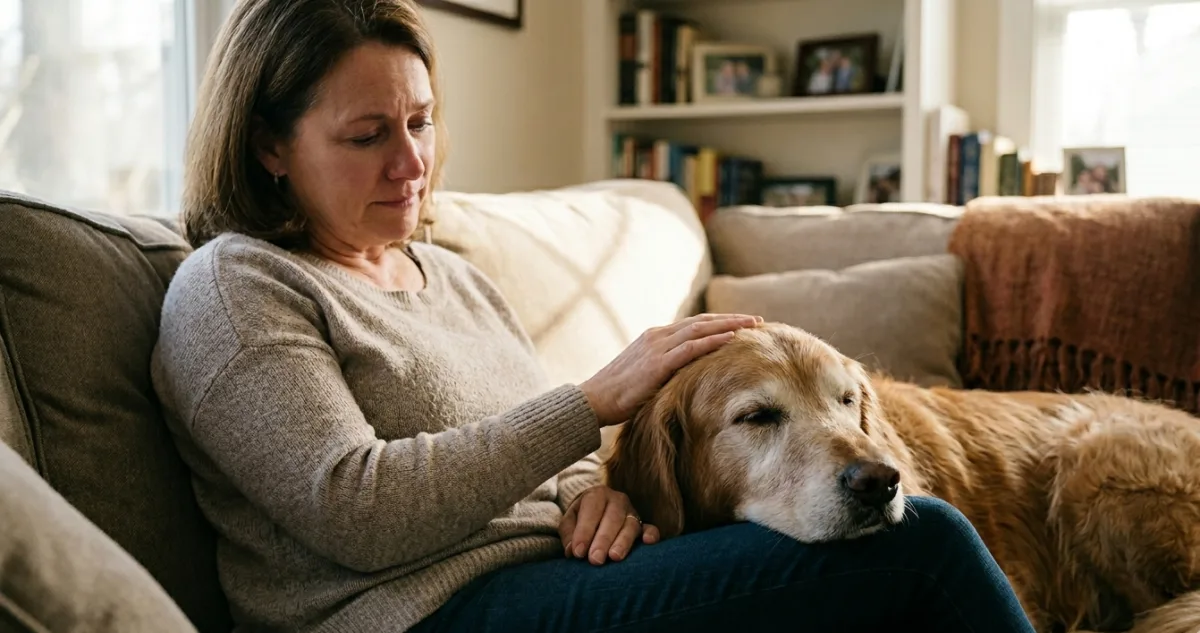
If you have found your way here, you are probably carrying one of the hardest questions a pet owner ever faces: is it time to let my pet go? There is no formula that answers it perfectly, and no one can make this decision for you. What we can offer is a calm, honest framework to help you think it through with clarity and compassion — and a reminder that you do not have to do it alone.
Please note: This article is for general support and information only. It is not a substitute for professional veterinary advice, diagnosis, or treatment. Your veterinarian knows your pet’s specific condition and is the right person to guide this decision. Always consult them before making any choice about your pet’s end-of-life care.
This is a hard decision, and that is okay
Wrestling with this question does not mean you are giving up. It usually means the opposite: that you love your pet enough to put their comfort ahead of your own grief. Many people describe feeling torn between wanting more time and not wanting their companion to suffer. Both feelings are valid. Give yourself permission to sit with them.
Quality-of-life signs to watch for
Rather than looking for a single dramatic moment, it often helps to observe patterns over days and weeks. Gentle questions to ask yourself:
- Mobility: Can your pet stand, walk, and move to where they want to be without significant difficulty or distress?
- Eating and drinking: Are they still interested in food and water, and able to keep them down?
- Pain: Do they seem comfortable, or are there signs of pain that medication no longer eases — restlessness, panting, hiding, whimpering, or reluctance to be touched?
- Hygiene and incontinence: Can they stay reasonably clean and dry, or are accidents causing them distress or sores?
- Interest and joy: Do they still greet you, seek affection, or enjoy the small things they always loved? Or has the spark you knew faded?
The “more good days than bad” question
One of the most helpful frameworks many families use is simple: are there still more good days than bad ones? Some people keep a small calendar and mark each day as good or bad. Over a couple of weeks, a pattern often becomes clear that is hard to see in the moment. When the bad days consistently outnumber the good, it can be a sign that your pet’s comfort is slipping away.
Quality-of-life scales can give you a starting point
Veterinarians sometimes point families toward structured tools like the HHHHHMM scale, which scores seven areas: Hurt, Hunger, Hydration, Hygiene, Happiness, Mobility, and More good days than bad. These scales are not a verdict — they are simply a way to organize your observations into something you can talk through with your vet. Use them as a conversation starter, not a final answer.
Talk honestly with your veterinarian
Your veterinarian is your most important partner in this. They can assess pain you may not be able to see, explain what to expect as a condition progresses, and help you understand whether comfort is still realistic. Ask them directly: “If this were your pet, what would you be thinking about right now?” Most vets welcome that honesty and will meet you with compassion. There is no shame in asking for their guidance — that is exactly what they are there for.
Thinking gently about what comes after
When the time does come, you have caring options. Many families find that in-home pet euthanasia allows their pet to pass peacefully in a familiar place, surrounded by the people who love them. Afterward, pet cremation and aftercare services can help you honor their memory in a way that feels right for you. You do not need to figure any of this out today — but knowing the options exist can lift a little weight when the moment arrives.
A closing thought
There is rarely a perfect moment, and second-guessing is part of loving deeply. Whatever you decide, a choice made out of love for your pet’s comfort is a good one. Lean on your veterinarian, lean on the people around you, and be gentle with yourself. Your pet has been lucky to have someone who cares this much.